THE ORIGINAL COLLECTION · SINCE 2010

Environment
press releases.

Research announcements from universities, hospitals and scientific institutions. Explore the stories, people and discoveries behind the headlines.

Original publication datesPage 115
FIND A STORY

Find a past release.

Dates and source material belong to the original release.

Read our research explainers

Browse the collection · original publication order

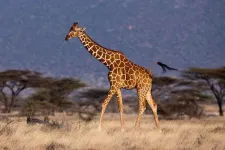
Gene flow in giraffes and what it means for their conservation
Environment

Gene flow in giraffes and what it means for their conservation

Giraffes are a beautiful and powerful example of what adaptive evolution can achieve. However, in recent years they have attained notoriety for a completely different reason: it has been suggested that instead of one giraffe species, there might be no fewer than four different species. Such dramatic taxonomic reappraisals in highly conspicuous and well-known “flagship” taxa are very unusual. The suggestion caused some uproar in the scientific community and received a lot of media attention. Much is at stake, because the way that most nature conservation works is focused on species, meaning that each species must receive its own dedicated conservation action plan and must ...

Read the release
A coral superhighway in the Indian Ocean
Environment

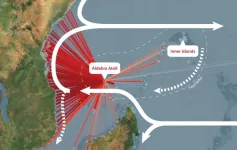
A coral superhighway in the Indian Ocean

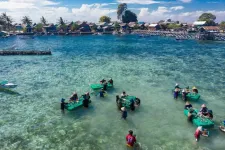
Despite being scattered across more than a million square kilometres, new research has revealed that remote coral reefs across the Seychelles are closely related. Using genetic analyses and oceanographic modelling, researchers at Oxford University demonstrated for the first time that a network of ocean currents scatter significant numbers of larvae between these distant islands, acting as a ‘coral superhighway.’ These results are published today in Scientific Reports. Dr April Burt (Department of Biology, University of Oxford, and Seychelles Islands Foundation), lead author of the study, said: ‘This discovery is very important because a key factor ...

Read the release
Environment

Beer byproduct behind Marmite could help us recycle metal waste

When we recycle electronic devices we can no longer use, we expect to make the most out of the precious natural resources that went into building them. But electronic waste is notoriously difficult to recycle, because it’s hard to separate the different metals in the waste from each other. Scientists have now found a way of selectively capturing metals from a waste stream using spent brewer’s yeast, the same beer byproduct that goes into Marmite. Not only that: the yeast can be reused, making the process even more eco-friendly. “Electronic waste is difficult to recycle because it is very heterogeneous,” said Dr Klemens Kremser ...

Read the release
Scientists identify biodiversity conservation gaps in Madagascar
Environment

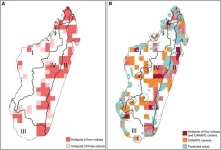
Scientists identify biodiversity conservation gaps in Madagascar

Despite the importance of biodiversity and the urgency to conserve it, assessing what aspect of biodiversity requires the highest priority has proven complex, especially when conservation resources are limited. A new study published in Current Biology sheds light on this question. Prof. CHEN Zhiduan's team from the Institute of Botany of the Chinese Academy of Sciences (IBCAS) and international collaborators have identified the spatial heterogeneity of biodiversity hotspots and endemism centers. With ...

Read the release
Canals used to drain peatlands are underappreciated hotspots for carbon emissions
Environment

Canals used to drain peatlands are underappreciated hotspots for carbon emissions

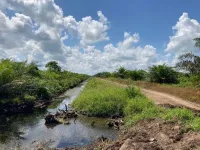
A new study led by UC San Diego Scripps Institution of Oceanography postdoctoral scholar Jennifer Bowen finds that canals used to drain soggy peatlands in Southeast Asia are likely hotspots for greenhouse gas emissions. The results, published March 8 in Nature Geoscience and supported by the Scripps Institutional Postdoctoral Program and Stanford University’s Precourt Institute for Energy, identify a previously unaccounted for source of emissions from these threatened, carbon-rich landscapes. Findings from the study suggest that the degradation of tropical peatlands in Southeast Asia has released even more planet-warming ...

Read the release
Land or sea? Scientists reveal effect of land conditions on Asian monsoon climate
Environment

Land or sea? Scientists reveal effect of land conditions on Asian monsoon climate

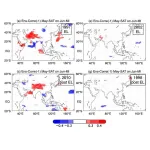
Tokyo, Japan – Researchers from Tokyo Metropolitan University have used numerical simulations to show how conditions on land impact weather during Asian summer monsoons. Focusing on the Tibetan plateau, they studied how varied land conditions combined with fixed maritime conditions illuminate the specific effects of the land on the weather. They found that the significance of land-atmosphere coupling varies greatly from year to year, with unexpectedly low dependence on maritime phenomena like El Niño. Asian monsoon systems impact some of the most highly populated areas of the world, affecting enormous swathes of Asia and ...

Read the release
Environment

Are mountains carbon dioxide sources or sinks? New study finds they can be both

There’s been a long-running debate in Earth sciences over whether mountains are a source of carbon dioxide or if they remove carbon dioxide from the atmosphere through mineral weathering. A new study has found that mountains can be sources or sinks and has identified the tipping point at which they switch from one to the other. The study — by Ludwig Maximilian University of Munich, Colorado State University and the German Research Centre for Geosciences — found that many mountains exist on a spectrum of removing or releasing carbon, and erosion rates determine the impact of mountains ...

Read the release
Facing illegal wildlife trade in the European union: A call for comprehensive measures
Environment

Facing illegal wildlife trade in the European union: A call for comprehensive measures

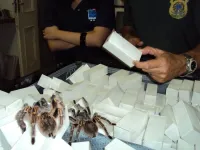
New paper now published in Science proposes three measures the European Union should implement to improve open information, legality and sustainability of wildlife trade in the region. Wildlife trade affects all kinds of species, from insects and fungi to large plants and mammals. The global trade of numerous species poses a significant threat to their survival, increasing their risk of extinction. The European Union is a major global hub for the illegal and unsustainable trade of those species whose international trade is not regulated by the Convention on International Trade in Endangered ...

Read the release
Environment

A better handle on the emissions budget for the Paris climate targets

A team of scientists from the University of Exeter, Met Office and Imperial College have found a new way to calculate the total carbon emissions consistent with the Paris climate targets of 1.5oC and 2oC of global warming. Although the exceptionally warm climate in 2023 was close to exceeding the 1.5oC level, the Paris targets relate to the average warming over ten or more years. The new study answers the question: how much carbon have we got left before we pass the Paris limits? About 15 years ago, climate scientists discovered a remarkably useful fact about climate change. Despite the vast complexity ...

Read the release
Good news for coral reef restoration efforts: Study finds “full recovery” of reef growth within four years
Environment

Good news for coral reef restoration efforts: Study finds “full recovery” of reef growth within four years

While the majority of the world’s reefs are now under threat or even damaged potentially beyond repair, a new study reported in the journal Current Biology on March 8 offers some encouraging news: efforts to restore coral reefs not only increase coral cover, but they can also bring back important ecosystem functions, and surprisingly fast. “We found that restored coral reefs can grow at the same speed as healthy coral reefs just four years after coral transplantation,” says Ines Lange (@InesLange9) of University of Exeter, UK. “This means that they provide lots of habitat for ...

Read the release
Mapping the future’s sweet spot for clean energy and biodiversity
Environment

Mapping the future’s sweet spot for clean energy and biodiversity

Climate change is driving both the loss of biodiversity and the need for clean, renewable energy. It is also shifting where species are expected to live in the future. Yet these realities are rarely considered together. Where can clean energy projects be built without impacting the future habitat ranges of threatened and endangered species? A study from the University of California, Davis, examines this question by overlaying renewable energy siting maps with the ranges of two species in the southwestern United States: the iconic and climate-vulnerable ...

Read the release
Reptile roadkill reveals new threat to endangered lizard species
Environment

Reptile roadkill reveals new threat to endangered lizard species

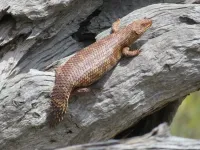
The chance sighting of a dead snake beside a sandy track in remote Western Australia, and the investigation of its stomach contents, has led Curtin University researchers to record the first known instance of a spotted mulga snake consuming a pygmy spiny-tailed skink, raising concerns for a similar-looking, endangered lizard species. Lead researcher Dr Holly Bradley from Curtin’s School of Molecular and Life Sciences said the discovery of the partially digested pygmy spiny-tailed skink within the snake had implications for the vulnerable western spiny-tailed skink species. “Found about 300km east ...

Read the release
Environment

Atmospheric carbon dioxide drawdown from rock weathering processes has its limits

Atmospheric carbon dioxide (CO2) drawdown from the chemical weathering of rocks peaks across a narrow range of moderate erosion rates, according to a new study. The findings provide new insights into the constraints of weathering-mediated CO2 drawdown and help to resolve conflicting data on the impact of uplift and erosion on the carbon cycle. The chemical weathering of rocks on Earth’s surface, in part, mediates the concentration of CO2 in the atmosphere and, thereby, the planet’s climate. Understanding the constraints of this process is critical to modeling Earth’s evolution over geologic time scales and ...

Read the release
Environment

Rock weathering and climate: Low-relief mountain ranges are largest carbon sinks

For many hundreds of millions of years, the average temperature at the surface of the Earth has varied by not much more than 20° Celsius, facilitating life on our planet. To maintain such stable temperatures, Earth must have a ‘thermostat’ that regulates the concentration of atmospheric carbon dioxide over geological timescales, influencing global temperatures. The erosion and weathering of rocks are important parts of this ‘thermostat.’ A team led by LMU geologist Aaron Bufe and Niels Hovius from the German Research Centre for Geosciences has now modeled the influence of these processes on carbon in the atmosphere. Their surprising result: CO2 capture through weathering ...

Read the release
Earth’s earliest forest revealed in Somerset fossils
Environment

Earth’s earliest forest revealed in Somerset fossils

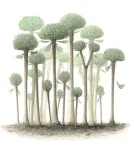
The oldest fossilised forest known on Earth – dating from 390 million years ago – has been found in the high sandstone cliffs along the Devon and Somerset coast of South West England. The fossils, discovered and identified by researchers from the Universities of Cambridge and Cardiff, are the oldest fossilised trees ever found in Britain, and the oldest known fossil forest on Earth. This fossil forest is roughly four million years older than the previous record holder, which was found in New York State. The fossils were found near Minehead, on the south bank of the Bristol Channel, near what is now a Butlin’s holiday ...

Read the release
Environment

Understanding wind and water at the equator key to more accurate future climate projections

Getting climate models to mimic real-time observations when it comes to warming is critical – small discrepancies can lead to misunderstandings about the rate of global warming as the climate changes. A new study from North Carolina State University and Duke University finds that when modeling warming trends in the Pacific Ocean, there is still a missing piece to the modeling puzzle: the effect of wind on ocean currents in the equatorial Pacific. “The Pacific Ocean can act like a thermostat for the global climate,” says Sarah Larson, assistant professor of marine, ...

Read the release
March research news from the Ecological Society of America
Environment

March research news from the Ecological Society of America

The Ecological Society of America (ESA) presents a roundup of six research articles published in March issues across its six esteemed journals. Widely recognized for fostering innovation and advancing ecological knowledge, ESA's journals consistently feature innovative and impactful studies. The compilation of papers delves into beetle energetics, the interplay between wildfire and climate change, salamander conservation and more, showcasing the Society's commitment to promoting cutting-edge research ...

Read the release
UTA educating schoolchildren about solar eclipse
Environment

UTA educating schoolchildren about solar eclipse

The University of Texas at Arlington has received a grant from the National Science Foundation (NSF) to support educational activities related to the upcoming eclipse. UTA faculty and graduate students are visiting elementary, middle and high schools in the DFW area in March to give talks to about 4,000 students explaining the natural phenomena occurring during the eclipse and the physics behind it. UTA will also provide special eclipse glasses for students to use to avoid eye damage. The $50,000 grant will also provide for about 1,500 students to take field trips to the UTA Planetarium, one of the three largest in Texas, to learn ...

Read the release
Edge-nitrogen doped porous carbon for energy-storage potassium-ion hybrid capacitors
Environment

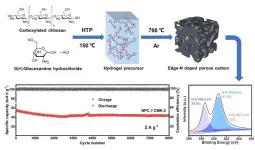
Edge-nitrogen doped porous carbon for energy-storage potassium-ion hybrid capacitors

They published their work on March. 4th in Energy Material Advances, a Science Partner Journal (https://spj.science.org/journal/energymatadv). "The development of cost-effective and high-performance electrochemical energy storage devices is imperative," said paper's corresponding author Wei Chen, a professor in the School of Chemistry and Materials Science, University of Science and Technology of China (USTC). "Currently, lithium-ion batteries still dominate the market, but they are limited in both lithium as a resource and in their power densities." Chen ...

Read the release
For Boston College professor, research into "high latitude" reaches of the seas led to improving accurate access to real-time ocean data
Environment

For Boston College professor, research into "high latitude" reaches of the seas led to improving accurate access to real-time ocean data

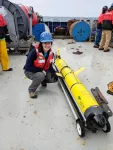
Chestnut Hill, Mass (03/06/2024) – Boston College Assistant Professor of Earth and Environmental Sciences Hilary Palevsky has been awarded a nearly $1-million National Science Foundation CAREER Award for her work to make remote ocean monitoring data accessible and accurate in real time and produce a series of educational videos to guide students using the data. Palevsky, whose research focuses on marine biogeochemistry and the mechanisms that enable the ocean to absorb carbon dioxide from the atmosphere, said the funding will allow her to build upon the work she has done to help scientists use the ...

Read the release
Marine algae implants could boost crop yields
Environment

Marine algae implants could boost crop yields

Scientists have discovered the gene that enables marine algae to make a unique type of chlorophyll. They successfully implanted this gene in a land plant, paving the way for better crop yields on less land. Finding the gene solves a long-standing mystery amongst scientists about the molecular pathways that allow the algae to manufacture this chlorophyll and survive. “Marine algae produce half of all the oxygen we breathe, even more than plants on land. And they feed huge food webs, fish that get eaten by mammals and humans,” said UC Riverside ...

Read the release
Aluminum nanoparticles make tunable green catalysts
Environment

Aluminum nanoparticles make tunable green catalysts

HOUSTON – (March 5, 2024) – Catalysts unlock pathways for chemical reactions to unfold at faster and more efficient rates, and the development of new catalytic technologies is a critical part of the green energy transition. The Rice University lab of nanotechnology pioneer Naomi Halas has uncovered a transformative approach to harnessing the catalytic power of aluminum nanoparticles by annealing them in various gas atmospheres at high temperatures. According to a study published in the Proceedings of the National Academy of Sciences, Rice ...

Read the release
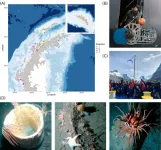
Antarctic researchers hitched a lift on a cruise ship, and recommend this eco-friendly, collaborative approach to remote ocean science
Environment

Antarctic researchers hitched a lift on a cruise ship, and recommend this eco-friendly, collaborative approach to remote ocean science

Antarctic researchers hitched a lift on a cruise ship, and recommend this eco-friendly, collaborative approach to remote ocean science. #### Article URL: https://journals.plos.org/climate/article?id=10.1371/journal.pclm.0000348 Article Title: New methods of undertaking marine science in Antarctica using tourism vessels Contact: Matthew Mulrennan; matt@kolossal.org Author Countries: Canada, United States Funding: The authors received no specific funding for this work. END ...

Read the release
Environment

After decades of Arctic sea ice getting faster and more hazardous for transport, models suggest a dramatic reversal is coming, York University study finds

TORONTO, March 5, 2024 – Will ice floating in the Arctic Ocean move faster or slower over the coming decades? The answer to this question will tell us whether marine transportation can be expected to get more or less hazardous. It might also have important implications for the rate of ice cover loss, which is hugely consequential for Northern Indigenous communities, ecosystems, and the global climate system. While observational data suggest the trend has been towards faster sea ice speeds, ...

Read the release
We know the Arctic is warming -- What will changing river flows do to its environment?
Environment

We know the Arctic is warming -- What will changing river flows do to its environment?

AMHERT, Mass.– Scientists at the University of Massachusetts Amherst recently combined satellite data, field observations and sophisticated numerical modeling to paint a picture of how 22.45 million square kilometers of the Arctic will change over the next 80 years. As expected, the overall region will be warmer and wetter, but the details—up to 25% more runoff, 30% more subsurface runoff and a progressively drier southern Arctic, provides one of the clearest views yet of how the landscape will respond to climate change. The results were published in the journal The Cryosphere. The Arctic is defined ...

Read the release
From the original Press-News collection. Issuers of news releases are responsible for the accuracy of their content.