THE ORIGINAL COLLECTION · SINCE 2010

Environment
press releases.

Research announcements from universities, hospitals and scientific institutions. Explore the stories, people and discoveries behind the headlines.

Original publication datesPage 65
FIND A STORY

Find a past release.

Dates and source material belong to the original release.

Read our research explainers

Browse the collection · original publication order

Environment

Skin-penetrating nematodes have a love-hate relationship with carbon dioxide

Key takeaways Globally, over 600 million people are infected with the skin-penetrating threadworm, Strongyloides stercoralis, mostly in tropical and subtropical regions with poor sanitation infrastructure. Infections are treated with ivermectin, but some nematodes are starting to develop resistance to this first-line drug. UCLA biologists have discovered that the nematodes respond differently to carbon dioxide at different stages in their life cycle, which could help scientists find ways to prevent or cure infections by targeting ...

Read the release

Colorado State receives $326M from DOE/EPA to improve oil and gas operations and reduce methane emissions
Environment

Colorado State receives $326M from DOE/EPA to improve oil and gas operations and reduce methane emissions

The Department of Energy and Environmental Protection Agency have awarded $326 million to three Colorado State University research projects that aim to improve U.S. oil and gas operations and reduce methane emissions nationwide. The EPA’s Methane Emissions Reduction Program is providing the funding to the CSU Energy Institute and faculty working across multiple departments in the Walter Scott, Jr. College of Engineering, with the goal of helping oil and gas operators improve operational efficiency and manage emissions. The efforts will also support activity to build an inventory of methane emissions, ...

Read the release
Garden ponds: Hidden gems of urban biodiversity conservation
Environment

Garden ponds: Hidden gems of urban biodiversity conservation

Urbanisation is rapidly transforming landscapes worldwide, becoming a key driver of global biodiversity loss. It often impacts biodiversity negatively by creating selective environments that limit species diversity in urban compared to natural habitats. Amidst this challenge, understanding and enhancing urban blue-green infrastructure is critical. Garden ponds are small yet significant water features that are increasingly common in urban areas. They offer numerous ecosystem services, like aesthetic purposes, microclimate regulation, and habitats for ornamental species. However, their role in supporting ...

Read the release
Environment

Peptides to clean up microplastics

Researchers have identified peptides that can help remove microplastics from the environment by combining biophysical modeling, molecular dynamics, quantum computing, and reinforcement learning. The ultimate goal of the work is peptide-based technologies that can find, capture, and destroy microscopically tiny plastic particles. Microplastics, plastic particles smaller than 5 mm, are ubiquitous pollutants, found everywhere from human breastmilk to Antarctic snow. Fengqi You and colleagues used a range of tools to identify peptides ...

Read the release
Water as a waste management source: SEOULTECH researchers revolutionize catalytic plastic recycling
Environment

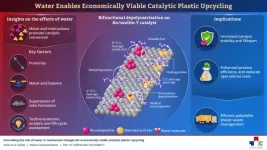
Water as a waste management source: SEOULTECH researchers revolutionize catalytic plastic recycling

Plastics are undeniably useful materials that have found their way into virtually all human activities. However, with yearly global plastic production exceeding 400 million tons, the environmental threat posed by increased plastic consumption and disposal, contributing to its pollution, is also bigger than ever. Considering that only one-tenth of all plastic waste is recycled, new technologies that can help tackle this growing problem are urgently required. Catalytic recycling techniques, such as hydrogenolysis and hydrocracking, are emerging chemical processes that can break down plastic waste into simpler components ...

Read the release
After millennia as carbon dioxide sink, more than one-third of Arctic-boreal region is now a source
Environment

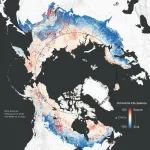
After millennia as carbon dioxide sink, more than one-third of Arctic-boreal region is now a source

After millennia as a carbon deep-freezer for the planet, regional hotspots and increasingly frequent wildfires in the northern latitudes have nearly canceled out that critical storage capacity in the permafrost region, according to a new study published in Nature Climate Change. An international team led by Woodwell Climate Research Center found that a third (34 percent) of the Arctic-boreal zone (ABZ)—the treeless tundra, boreal forests, and wetlands that make up Earth’s northern latitudes—is now a source of carbon to the atmosphere. That balance sheet is made up of carbon dioxide (CO₂) uptake from plant photosynthesis and CO₂ ...

Read the release
HKU ecologists uncover significant ecological impact of hybrid grouper release through religious practices
Environment

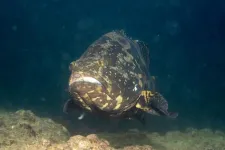
HKU ecologists uncover significant ecological impact of hybrid grouper release through religious practices

Ecologists from the School of Biological Sciences (SBS) and the Swire Institute of Marine Science (SWIMS) at The University of Hong Kong (HKU) have identified significant ecological risks associated with the release of hybrid groupers into Hong Kong’s coastal waters, a practice often linked to religious ‘mercy release’ rituals. Their study highlights how the Tiger Grouper-Giant Grouper hybrid (TGGG), also known as the Sabah grouper, disrupts local marine ecosystems by exploiting unique ecological niches and potentially becoming a dominant predator. This research, the first ...

Read the release
Environment

MSU researcher’s breakthrough model sheds light on solar storms and space weather

Images EAST LANSING, Mich. – Our sun is essentially a searing hot sphere of gas. Its mix of primarily hydrogen and helium can reach temperatures between 10,000 and 3.6 million degrees Fahrenheit on its surface and its atmosphere’s outermost layer. Because of that heat, the blazing orb constantly oozes a stream of plasma, made up of charged subatomic particles — mainly protons and electrons. The sun’s gravity can’t contain them because they hold so much energy as heat, so they drift away into space as solar wind. Understanding how charged particles ...

Read the release
Environment

Polymer editing can upcycle waste into higher-performance plastics

Polymer editing can upcycle waste into higher-performance plastics By editing the polymers of discarded plastics, chemists at the Department of Energy’s Oak Ridge National Laboratory have found a way to generate new macromolecules with more valuable properties than those of the starting material. Upcycling may help remedy the roughly 450 million tons of plastic discarded worldwide annually, of which only 9% gets recycled; the rest is incinerated or winds up in landfills, oceans or elsewhere. ORNL’s ...

Read the release
Climate change driving ‘cost-of-living' squeeze in lizards
Environment

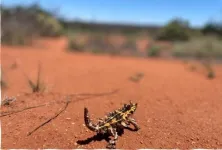
Climate change driving ‘cost-of-living' squeeze in lizards

Desert lizards are facing a ‘cost-of-living’ squeeze as global temperatures continue to rise, a new study finds. For a lizard, the 'cost-of-living' is tightly linked to its body temperature, which dictates both how much food it needs and whether it can go outside to feed. Desert lizards are especially challenged because food is sparse, and it is often too hot to forage. Published today in Science, the study found climate warming can ‘squeeze’ desert lizard energy budgets by increasing the food they need just ...

Read the release
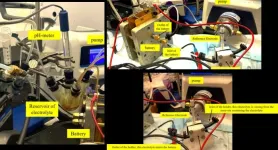
The ins and outs of quinone carbon capture
Environment

The ins and outs of quinone carbon capture

Carbon capture, or the isolation and removal of carbon dioxide from the atmosphere during industrial processes like cement mixing or steel production, is widely regarded as a key component of fighting climate change. Existing carbon capture technologies, such as amine scrubbing, are hard to deploy because they require significant energy to operate and involve corrosive compounds. As a promising alternative, researchers from the Harvard John A. Paulson School of Engineering and Applied Sciences (SEAS) have developed carbon capture systems that use molecules called ...

Read the release
Laboratory for Laser Energetics at the University of Rochester launches IFE-STAR ecosystem and workforce development initiatives
Environment

Laboratory for Laser Energetics at the University of Rochester launches IFE-STAR ecosystem and workforce development initiatives

The University of Rochester’s Laboratory for Laser Energetics (LLE) has been awarded a $2.25 million grant over three years from the US Department of Energy’s Office of Fusion Energy Sciences. This funding establishes the Inertial Fusion Energy Science and Technology Accelerated Research (IFE-STAR) ecosystem that brings together academia, national laboratories, and the private sector to develop a clean, safe, and virtually limitless energy source, built on US leadership in inertial fusion. Inertial ...

Read the release
Environment

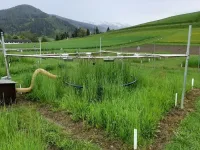
Compounding drought and climate effects disrupt soil water dynamics in grasslands

A novel field experiment in Austria reveals that compounding climate conditions – namely drought, warming, and elevated atmospheric carbon dioxide (CO2 ) – could fundamentally reshape how water moves through soils in temperate grasslands. The findings provide new insights into post-drought soil water flow, in particular. Soil water, though a minuscule fraction of Earth's total water resources, plays a critical role in sustaining terrestrial life on Earth by regulating biogeochemical cycles, surface energy balance, and plant productivity. Soils also govern ...

Read the release
Environment

Multiyear “megadroughts” becoming longer and more severe under climate change

Severe droughts are becoming hotter, longer, and increasingly devastating to ecosystems as climate change accelerates, according to a new study, which reports that temperate grasslands, including in parts of the United States, are facing the worst effects. The findings provide a global quantitative understanding of multiyear droughts (MYDs) – prolonged events lasting years or decades – and offer a benchmark for understanding their global trends and impacts. As droughts become more frequent ...

Read the release
The megadroughts are upon us
Environment

The megadroughts are upon us

Increasingly common since 1980, persistent multi-year droughts will continue to advance with the warming climate, warns a study from the Swiss Federal Institute for Forest, Snow, and Landscape Research (WSL), with Professor Francesca Pellicciotti from the Institute of Science and Technology Austria (ISTA) participating. This publicly available forty-year global quantitative inventory, now published in Science, seeks to inform policy regarding the environmental impact of human-induced climate change. It also detected previously ‘overlooked’ events. Fifteen years of a persistent, devastating megadrought—the longest lasting in a thousand years—have nearly dried out ...

Read the release
New study reveals how climate change may alter hydrology of grassland ecosystems
Environment

New study reveals how climate change may alter hydrology of grassland ecosystems

New research co-led by the University of Maryland reveals that drought and increased temperatures in a CO2-rich climate can dramatically alter how grasslands use and move water. The study provides the first experimental demonstration of the potential impacts of climate change on water movement through grassland ecosystems, which make up nearly 40% of Earth’s land area and play a critical role in Earth’s water cycle. The study appears in the January 17, 2025, issue of the journal Science. “If we want to predict the effects of climate change ...

Read the release
Arctic hotspots study reveals areas of climate stress in Northern Alaska, Siberia
Environment

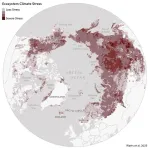
Arctic hotspots study reveals areas of climate stress in Northern Alaska, Siberia

Ecological warning lights have blinked on across the Arctic over the last 40 years, according to new research, and many of the fastest-changing areas are clustered in Siberia, the Canadian Northwest Territories, and Alaska. The analysis of the rapidly warming Arctic-boreal region, published in Geophysical Research Letters this week, provides a zoomed-in picture of ecosystems experiencing some of the fastest and most extreme climate changes on Earth. Many of the most climate-stressed areas featured permafrost, or ground that stays frozen year-round, and experienced both severe warming and drying ...

Read the release
Environment

A tangled web: Fossil fuel energy, plastics, and agrichemicals discourse on X/Twitter

An analysis of the nine top players in the U.S. fossil fuel-derived hydrocarbon industries (oil/gas, plastics, and agrichemicals) shows tight linkages across the three different sectors, with news media, other petrochemical industry players, and politicians also frequently tagged, according to a study published January 15, 2025 in the open-access journal PLOS Climate by Alaina Kinol from Northeastern University, United States, and colleagues. Previous research on connections between the fossil fuel and plastics sectors and ...

Read the release
Snow leopard fossils clarify evolutionary history of species
Environment

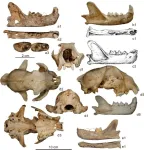
Snow leopard fossils clarify evolutionary history of species

The snow leopard (Panthera uncia) is a large feline unique to the Qinghai-Tibet Plateau and its surrounding areas. As the apex predator in the region, the snow leopard plays a crucial role in maintaining ecological stability. Its unique characteristics, coupled with its striking appearance, have made it a flagship species for conservation efforts aimed at protecting the ecosystem of the Qinghai-Tibet Plateau. Unfortunately, few snow leopard fossils have been found in the Qinghai-Tibet Plateau region, particularly fossils from the Quaternary period. As a result, it’s unclear how snow leopards evolved their specialized adaptations to this environment. On the one hand, molecular ...

Read the release
New study shows that corn-soybean crop rotation benefits are extremely sensitive to climate
Environment

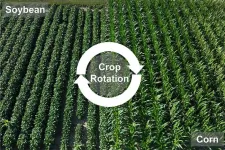
New study shows that corn-soybean crop rotation benefits are extremely sensitive to climate

MINNEAPOLIS / ST. PAUL (01/15/2024) — A study by researchers at the University of Minnesota Twin Cities offers new insights into how alternating corn and soybean crops can help increase crop yield in a changing climate. The research is published in the peer-reviewed scientific journal Global Change Biology. Rising temperatures and weather extremes are threatening global food security, making it crucial to understand how sustainable practices like crop rotation can help improve agricultural yields and resilience. The study found that the benefits to corn-soybean rotation, compared to continuous corn year after year, are extremely sensitive to ...

Read the release
Environment

Floating solar panels could support US energy goals

Federal reservoirs could help meet the country’s solar energy needs, according to a new study published in Solar Energy. For the study, Evan Rosenlieb and Marie Rivers, geospatial scientists at the U.S. Department of Energy National Renewable Energy Laboratory (NREL), as well as Aaron Levine, a senior legal and regulatory analyst at NREL, quantified for the first time exactly how much energy could be generated from floating solar panel projects installed on federally owned or regulated reservoirs. (Developers can find specific details for each reservoir on the website AquaPV.) And the potential is surprisingly ...

Read the release
Environment

Beach guardians: How hidden microbes protect coastal waters in a changing climate

A hidden world teeming with life lies below beach sands. New Stanford-led research sheds light on how microbial communities in coastal groundwater respond to infiltrating seawater. The study, published Dec. 22 in Environmental Microbiology, reveals the diversity of microbial life inhabiting these critical ecosystems and what might happen if they are inundated by rising seas. “Beaches can act as a filter between land and sea, processing groundwater and associated chemicals before they reach the ocean,” said study co-first author Jessica Bullington, a Ph.D. student in Earth system science in the Stanford Doerr School of Sustainability. “Understanding ...

Read the release
Study reveals root-lesion nematodes in maize crops - and one potential new species
Environment

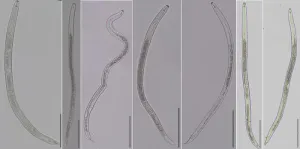
Study reveals root-lesion nematodes in maize crops - and one potential new species

A new study has lifted the lid on five species of root-lesion nematodes living in maize crops across New Zealand - and suggested the existence of a hitherto-unsuspected cryptic species. The article, ‘Molecular characterization of root-lesion nematode, (Pratylenchus spp.) and their prevalence in New Zealand maize fields’, is published in Letters in Applied Microbiology, an Applied Microbiology International publication. Identifying these nematodes and understanding their distribution will enable targeted pest management strategies, helping to protect crop yields and maintain agricultural ...

Read the release
Environment

Green hydrogen: Big gaps between ambition and implementation

"Over the past three years, global project announcements for green hydrogen have almost tripled," says PIK researcher and lead author Adrian Odenweller. "However, only seven percent of the production capacity originally announced for 2023 has been completed on time during this period." According to the study, the recent problems with the market ramp-up of green hydrogen can be attributed to increased costs, a lack of willingness to pay on the demand side and uncertainties about future subsidies and regulation. "Enormous additional subsidies of around one trillion US dollars would be required to realise all announced hydrogen projects by 2030," explains Falko ...

Read the release
Digitizing hope: Collaboration helps preserve a species on the brink of extinction
Environment

Digitizing hope: Collaboration helps preserve a species on the brink of extinction

The vaquita, which means “little cow” in Spanish, is the world’s smallest porpoise and most endangered marine mammal. They also have the smallest range of any marine mammal; about 1,500 square miles within the northern Gulf of California. Since 1997, vaquitas have experienced a dramatic population loss from about 600 individuals to an estimate of less than 10 animals to date. At this current rate, vaquitas are expected to become extinct imminently. The vaquita’s decline is caused by entanglement in illegal gillnets used to fish totoaba, an endangered species prized for its swim bladder. Despite a gillnet ban and conservation efforts, ...

Read the release
From the original Press-News collection. Issuers of news releases are responsible for the accuracy of their content.