THE ORIGINAL COLLECTION · SINCE 2010

Science
press releases.

Research announcements from universities, hospitals and scientific institutions. Explore the stories, people and discoveries behind the headlines.

Original publication datesPage 224
FIND A STORY

Find a past release.

Dates and source material belong to the original release.

Read our research explainers

Browse the collection · original publication order

Autistic traits shape how we explore
Science

Autistic traits shape how we explore

People with stronger autistic trails showed distinct exploration patterns and higher levels of persistence in a computer game, ultimately resulting in better performance than people with lower scores of autistic traits, according to a new study published this week in PLOS Computational Biology by Francesco Poli of Radboud Universiteit, the Netherlands, and colleagues. Scientists know that individuals display curiosity and explore their environments to learn. How a person selects what they want to explore plays a pivotal role in how they learn and research has shown that exploration levels are highly variable across ...

Read the release
Science

UCLA chemists just broke a 100-year-old rule and say it’s time to rewrite the textbooks

Key takeaways According to Bredt's rule, double bonds cannot exist at certain positions on organic molecules if the molecule's geometry deviates too far from what we learn in textbooks. This rule has constrained chemists for a century. A new paper in Science shows how to make molecules that violate Bredt’s rule, allowing chemists to find practical ways to make and use them in reactions. UCLA chemists have found a big problem with a fundamental rule of organic chemistry that has been around for 100 years — it’s ...

Read the release
Science

Uncovered: the molecular basis of colorful parrot plumage

A single enzyme fine-tunes red and yellow pigments in parrots’ polychromatic plumage, according to a new study. The findings reveal new insights into the molecular mechanisms underlying the evolution and display of color variation in one of nature’s most colorful birds. Colors play a central role in ecological adaptation and communication in the natural world. This is particularly true for birds, which are especially notable among animals for their wide range of vibrant plumage colors and patterns. Among birds, ...

Read the release
Science

Nov. 14 AARP Author Q&A at GSA 2024 in Seattle: Debra Whitman, Global Aging Expert and Author of ‘The Second Fifty: Answers to the 7 Big Questions of Midlife and Beyond’

Author Q&A: Debra Whitman, Global Aging Expert and Author of “The Second Fifty” Date: Thursday, November 14 Time: 4:30 to 5:30 p.m. PT Location: Seattle Convention Center Arch Building Room 305 Registration: GSA 2024 Annual Scientific Meeting media registration is required to attend this event. During this meet-the-author media roundtable, Debra Whitman, executive vice president and chief public policy officer at AARP, will discuss her new book, “The Second Fifty: Answers to the 7 Big ...

Read the release
NIH trial of rectal microbicide for HIV prevention begins in the United States
Science

NIH trial of rectal microbicide for HIV prevention begins in the United States

WHAT: A clinical trial sponsored by the National Institutes of Health (NIH) has launched to examine the safety and acceptability of a novel rectal HIV microbicide douche containing the antiretroviral drug tenofovir. This “on-demand” HIV prevention approach involves using the microbicide prior to a potential exposure from receptive anal intercourse. Several forms of HIV pre-exposure prophylaxis (PrEP) are in use in the United States and globally, namely daily oral pills, long-acting injections, and a monthly vaginal ring. The Centers for Disease Control and Prevention advises that gay, bisexual and other men who have sex with ...

Read the release
Development of a simple, revolutionary printing technique for periodic nano/microstructures
Science

Development of a simple, revolutionary printing technique for periodic nano/microstructures

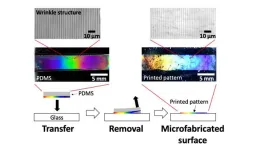
1. A team of researchers from NIMS and the University of Connecticut has developed a printing technique capable of forming a periodic nano/microstructure on the surface of a polydimethylsiloxane (PDMS) slab and easily transferring it onto the surface of a glass substrate. This technique enables us to create materials with useful functions—including water-repellency and the ability to generate structural colors—without expensive equipment and complex processes. In addition, the technique may be used to fabricate materials capable of realizing anti-fogging and/or generating structural colors on their surfaces—functions potentially useful in the development ...

Read the release
Science

Genomic databases need more diversity

CONTACT: Heide Aungst HAungst@som.umaryland.edu (216) 970-5773 (cell) UNDER EMBARGO UNTIL 11 am on OCT. 31 Genomic Databases Need More Diversity University of Maryland School of Medicine Researchers Create Large Database of Latin American Populations to Tackle Health Disparities BALTIMORE, Oct. 31, 2024: It is commonly known that most genomic databases are biased toward people with European ancestry. Scientists have warned that leaving out other populations could skew results in areas such as drug development, ...

Read the release
New ESO image captures a dark wolf in the sky
Science

New ESO image captures a dark wolf in the sky

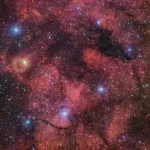
For Halloween, the European Southern Observatory (ESO) reveals this spooktacular image of a dark nebula that creates the illusion of a wolf-like silhouette against a colourful cosmic backdrop. Fittingly nicknamed the Dark Wolf Nebula, it was captured in a 283-million-pixel image by the VLT Survey Telescope (VST) at ESO’s Paranal Observatory in Chile. Found in the constellation Scorpius, near the centre of the Milky Way on the sky, the Dark Wolf Nebula is located around 5300 light-years from Earth. This image takes up an area in the sky equivalent to four full Moons, but is actually part of an even ...

Read the release
New research reveals delayed evolutionary origin of Asteriidae sea stars
Science

New research reveals delayed evolutionary origin of Asteriidae sea stars

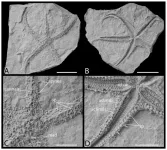
A study published in PeerJ Life and Environment has reshaped our understanding of the evolutionary history of sea stars, particularly the family Asteriidae. The study, titled Phylogenetic and taxonomic revisions of Jurassic sea stars support a delayed evolutionary origin of the Asteriidae, introduces new findings that challenge longstanding assumptions about the evolutionary timeline of these marine invertebrates. Sea stars of the superorder Forcipulatacea, comprising approximately 400 species, are integral ...

Read the release
The silk thread that can turn clothes into charging stations
Science

The silk thread that can turn clothes into charging stations

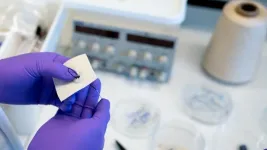
Imagine a sweater that powers electronics to monitor your health or charge your mobile phone while running. This development faces challenges because of the lack of materials that both conduct electricity stably and are well suited for textiles. Now a research group, led by Chalmers University of Technology in Sweden, presents an ordinary silk thread, coated with a conductive plastic material, that shows promising properties for turning textiles into electricity generators. Thermoelectric textiles convert temperature differences, for example between our bodies and the surrounding ...

Read the release
Why elephants never forget but fleas have, well, the attention span of a flea
Science

Why elephants never forget but fleas have, well, the attention span of a flea

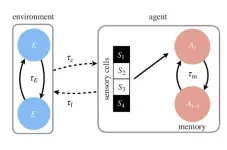
Researchers at the Complexity Science Hub and Santa Fe Institute have developed a model to calculate how quickly or slowly an organism should ideally learn in its surroundings. An organism’s ideal learning rate depends on the pace of environmental change and its life cycle, they say. Every day, we wake to a world that is different, and we adjust to it. Businesses face new challenges and competitors and adapt or go bust. In biology, this is a question of survival: every organism, from bacteria to blue whales, faces the challenge of adapting to environments that ...

Read the release
Researchers take broadband high-resolution frequency combs into the UV
Science

Researchers take broadband high-resolution frequency combs into the UV

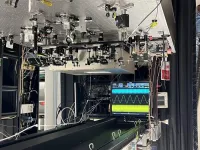
WASHINGTON — Researchers have developed a new ultrafast laser platform that generates ultra-broadband ultraviolet (UV) frequency combs with an unprecedented one million comb lines, providing exceptional spectral resolution. The new approach, which also produces extremely accurate and stable frequencies, could enhance high-resolution atomic and molecular spectroscopy. Optical frequency combs — which emit thousands of regularly spaced spectral lines — have transformed fields like metrology, spectroscopy and precision timekeeping via optical atomic clocks, earning the 2005 Nobel Prize in Physics. The ...

Read the release
Science

Low-level lead poisoning is still pervasive in the US and globally

Chronic, low-level lead poisoning is a major risk factor for cardiovascular disease in adults and cognitive deficits in children, even at levels previously thought to be safe, according to a new paper by Columbia University Mailman School of Public Health, Simon Fraser University in Canada, and Harvard Medical School, and Boston Children’s Hospital. Low-level lead poisoning is a risk factor for preterm Birth, cognitive deficits and attention deficit–hyperactivity disorder, (ADHD), as well as increased blood pressure and reduced heart rate variability. The findings ...

Read the release
How researchers can maximize biological insights using animal-tracking devices
Science

How researchers can maximize biological insights using animal-tracking devices

Biologgers allow us to see with unprecedented precision how animals move and behave in the wild. But that's only part of the picture, according to a UC Santa Cruz ecologist renowned for using biologging data to tell the deeper story about the lives of marine mammals in a changing world. In a new opinion piece published on October 30 in Trends in Ecology and Evolution, researchers present a framework intended to underscore the value of biologging data for testing important questions about the natural world. They urge that now is the time to build upon "discovery-based science," where observations are presented ...

Read the release
Science

Rapid horizontal eye movement can improve stability in people with Parkinson’s

Rapid side-to-side eye movements can help stabilize posture, avoid falls and maintain balance for people with Parkinson’s disease, just as they can for healthy people. This seemingly counterintuitive conclusion was reached by researchers at São Paulo State University (UNESP) in Brazil and the University of Lille in France in a study supported by FAPESP. An article on the study is published in the journal Biomechanics. Ten individuals diagnosed with Parkinson’s and 11 neurologically healthy individuals participated in the study. All participants were over 60 and were submitted to tests that ...

Read the release
Large herbivores have lived in Yellowstone National Park for more than 2,000 years
Science

Large herbivores have lived in Yellowstone National Park for more than 2,000 years

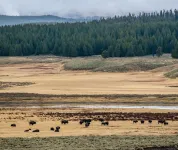
Large herbivores like bison or elk have continuously lived in the Yellowstone National Park region for about 2,300 years according to a new analysis of chemicals preserved in lake sediments. John Wendt of Oklahoma State University, U.S., and colleagues present these findings in the open-access journal PLOS ONE on October 30, 2024. The near-extinction of bison in North America in the 19th and 20th centuries was a major ecological catastrophe and little is known about where and how these animals lived before European colonization. In the new study, researchers attempted to determine the dominant large herbivores that lived in the northern Yellowstone National Park ...

Read the release
Science

Bones from Tudor Mary Rose shipwreck suggest handedness might affect collarbone chemistry

Editor's Note: Please do not include the image originally uploaded with this release in any of your coverage as the licensing information has now changed. Please contact onepress@plos.org for any questions. Updated: October 30, 2024 A new study of human skeletal remains from the wreck of the 16th century English warship Mary Rose suggests that whether a person is right- versus left-handed may influence how their clavicle bone chemistry changes as they age. Dr. Sheona Shankland of Lancaster University, U.K., and colleagues present these findings in the open-access journal PLOS ONE on October 30, 2024. The ...

Read the release
Farewell frost! New surface prevents frost without heat
Science

Farewell frost! New surface prevents frost without heat

Someday, people might finally say goodbye to defrosting the freezer or scraping frost off slippery surfaces. Northwestern University engineers have developed a new strategy that prevents frost formation before it begins. In a new study, the researchers discovered that tweaking the texture of any surface and adding a thin layer of graphene oxide prevents 100% of frost from forming on surfaces for one week or potentially even longer. This is 1,000 times longer than current, state-of-the-art anti-frosting surfaces. As an added bonus, ...

Read the release
Why does Lake Geneva emit large quantities of CO2? UNIL scientists provide the answer and solve a scientific enigma
Science

Why does Lake Geneva emit large quantities of CO2? UNIL scientists provide the answer and solve a scientific enigma

Unlike oceans, lakes are significant emitters of CO₂. But why is this the case, and what mechanisms are at play? For the first time, UNIL scientists have successfully explained the complete carbon cycle in Lake Geneva, creating a model that can be applied to several of the world's largest lakes. Contrary to previous beliefs, it is the natural erosion of rocks that is responsible for the significant CO2 emissions from Lake Geneva and many of the world's large lakes. This study provides the missing piece for understanding the carbon cycle in lakes. The LéXPLORE lake platform in Switzerland played a major role in this discovery of international ...

Read the release
Science

MD Anderson Research Highlights for October 30, 2024

HOUSTON ― The University of Texas MD Anderson Cancer Center’s Research Highlights showcases the latest breakthroughs in cancer care, research and prevention. These advances are made possible through seamless collaboration between MD Anderson’s world-leading clinicians and scientists, bringing discoveries from the lab to the clinic and back. Epigenetic targets and genomic stem cell pathways drive adult hair regeneration Retrotransposons are interspersed repeating sequences that make up over 40% of the human genome. Proper tissue regeneration requires ...

Read the release
Three Baycrest leaders named 2024 Canada’s Most Powerful Women: WXN’s Top 100 Award winners
Science

Three Baycrest leaders named 2024 Canada’s Most Powerful Women: WXN’s Top 100 Award winners

Toronto, ON, October 30, 2024 – Three Baycrest leaders are among those named winners of Women Executive Network’s (WXN) prestigious 2024 Canada’s Most Powerful Women: Top 100 Awards, celebrating exceptional leadership and groundbreaking achievements that have meaningfully transformed their industries, companies, communities and country. Dr. Allison Sekuler, President and Chief Scientist, Baycrest Academy for Research and Education and President and Chief Scientist, Centre for Aging + Brain Health Innovation, powered by Baycrest (CABHI) Dr. ...

Read the release
Scientists uncover new mechanism in plant cold sensing
Science

Scientists uncover new mechanism in plant cold sensing

Cold damage is a major challenge in rice production, and identifying key gene modules in signaling pathways is a crucial means of addressing this issue. A Chinese research team has recently discovered a part of the plant’s cell membrane that helps plants sense when it's cold. This cell membrane component, known as the COLD6-OSM1 module, triggers the production of a special molecule, 2',3'-cAMP, which helps plants sense and respond to low temperatures. This secondary messenger is a key upstream component that mediates the signaling pathway by directly responding to signals ...

Read the release
Into the great wide open: How steppe pastoralist groups formed and transformed over time
Science

Into the great wide open: How steppe pastoralist groups formed and transformed over time

The wider Caucasus region, between the Black and the Caspian Seas, connects Europe, the Near East and Asia. It displays a huge geographic, ecological, economic, cultural, and linguistic range today, from the steppe zone in the north, the Caucasus mountains in the center, to the highlands of today’s Armenia, Georgia, Azerbaijan and Iran in the south. This diversity was no different in the past, where the archaeological record attests to many different influences from many surrounding regions. “It is precisely this interface of different eco-geographic features ...

Read the release
Science

New pathway for sensing cold temperatures identified in rice

A gene called COLD6 contributes to cold tolerance in rice, potentially offering a pathway to use molecular design to breed a rice variety with higher resistance to cold stress. This work appears October 30 in the Cell Press journal Molecular Cell. “Cold damage is a major challenge in rice production, and identifying key gene modules in signalling pathways is a crucial step in addressing this issue,” says senior study author Kang Chong of the Chinese Academy of Sciences. “Our research focused on uncovering the molecular mechanism behind crops’ response to cold stress. We hope to ...

Read the release
Science

Comparative metabolism of the humantenirine in liver microsomes from pigs, goats, and humans

Background and objectives Gelsemium elegans Benth (G. elegans) is a traditional medicinal plant; however, it is highly toxic, and toxicity varies significantly between species. The cause of this difference has not been clarified. Humantenirine is an important toxic alkaloid in G. elegans, and its metabolism has been poorly studied. This study aimed to compare the different metabolites formed by human liver microsomes, pig liver microsomes, and goat liver microsomes. Methods High-performance liquid chromatography/quadrupole time-of-flight mass spectrometry was used to study the metabolism of humantenirine in human liver microsomes, ...

Read the release
From the original Press-News collection. Issuers of news releases are responsible for the accuracy of their content.