THE ORIGINAL COLLECTION · SINCE 2010

Technology
press releases.

Research announcements from universities, hospitals and scientific institutions. Explore the stories, people and discoveries behind the headlines.

Original publication datesPage 95
FIND A STORY

Find a past release.

Dates and source material belong to the original release.

Read our research explainers

Browse the collection · original publication order

UNH receives $8M NSF grant to advance New Hampshire’s science and technology leadership
Technology

UNH receives $8M NSF grant to advance New Hampshire’s science and technology leadership

DURHAM, N.H.—New Hampshire will boost its research leadership as an innovator in science and technology and increase its STEM workforce with investments across the state’s institutions of higher education, thanks to an $8 million grant to the University of New Hampshire from the National Science Foundation. The cooperative agreement award, one of just three of its type in the nation, aims to increase research opportunities, mentoring, training and partnerships between New Hampshire’s community colleges, four-year colleges and universities and industry. “With this support, UNH will collaborate ...

Read the release
Scientists develop an affordable sensor for lead contamination
Technology

Scientists develop an affordable sensor for lead contamination

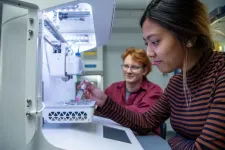
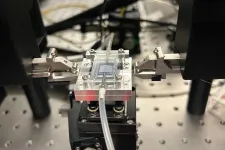
Engineers at MIT, Nanytang Technological University, and several companies have developed a compact and inexpensive technology for detecting and measuring lead concentrations in water, potentially enabling a significant advance in tackling this persistent global health issue. The World Health Organization estimates that 240 million people worldwide are exposed to drinking water that contains unsafe amounts of toxic lead, which can affect brain development in children, cause birth defects, and produce a variety of neurological, cardiac, ...

Read the release
Simulating diffusion using 'kinosons' and machine learning
Technology

Simulating diffusion using 'kinosons' and machine learning

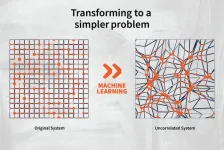
Researchers from the University of Illinois Urbana-Champaign have recast diffusion in multicomponent alloys as a sum of individual contributions, called “kinosons.” Using machine learning to compute the statistical distribution of the individual contributions, they were able to model the alloy and calculate its diffusivity orders of magnitude more efficiently than computing whole trajectories. This work was recently published in the journal Physical Review Letters. “We found a much more efficient way to calculate diffusion in solids, and at the same time, we learned more ...

Read the release
Technology

AI for more caring institutions

More and more public services — such as affordable housing, public school matching and child welfare — are relying on algorithms to make decisions and allocate resources. So far, much of the work that has gone into designing these systems has focused on workers’ experiences using them or communities’ perceptions of them. But what about the actual impact of these programs have on people, especially when the decisions the systems make lead to denial of services? Can you design algorithms to help people make sense of and ...

Read the release
Technology

ISS National Lab announces up to $750,000 in funding for technology development in low Earth orbit

KENNEDY SPACE CENTER (FL), May 14, 2024 – The International Space Station (ISS) National Laboratory is soliciting flight concepts for technology development that would utilize the space-based environment of the orbiting laboratory. This solicitation, “Technology Development and Applied Research Leveraging the ISS National Lab,” is open to a broad range of technology areas, including chemical and material synthesis in space, translational medicine, in-space edge computing, and ISAM (in-space servicing, assembly, and manufacturing). ...

Read the release
Using artificial intelligence to speed up and improve the most computationally-intensive aspects of plasma physics in fusion
Technology

Using artificial intelligence to speed up and improve the most computationally-intensive aspects of plasma physics in fusion

The intricate dance of atoms fusing and releasing energy has fascinated scientists for decades. Now, human ingenuity and artificial intelligence are coming together at the U.S. Department of Energy’s (DOE) Princeton Plasma Physics Laboratory (PPPL) to solve one of humankind’s most pressing issues: generating clean, reliable energy from fusing plasma. Unlike traditional computer code, machine learning — a type of artificially intelligent software — isn’t simply a list of instructions. Machine learning is software that can analyze data, infer relationships between features, learn from this new knowledge and adapt. PPPL researchers ...

Read the release
Researchers discover "topological hall effect" in two-dimensional quantum magnets
Technology

Researchers discover "topological hall effect" in two-dimensional quantum magnets

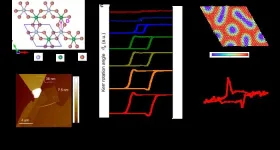
In a recent study published in Nature Physics, researchers from the Hefei Institutes of Physical Science of the Chinese Academy of Sciences, together with researchers of University of Science and Technology of China, have introduced the concept of the "Topological Kerr Effect" by using the low-temperature magnetic field microscopy system and the magnetic force microscopy imaging system supported by the steady-state high magnetic field experimental facility. The study holds great promise for advancing our understanding of topological magnetic ...

Read the release
KITECH develops deformable energy storage device via laser technology
Technology

KITECH develops deformable energy storage device via laser technology

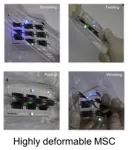
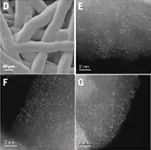
The joint research team, led by Dr. Chanwoo Yang and Researcher Seong Ju Park from Korea Institute of Industrial Technology(KITECH), along with Prof. Jin Kon Kim and Dr. Keon-Woo Kim from POSTECH, has successfully developed a compact energy storage device with excellent elasticity. This research was published in the world-renowned journal in the field of electronic engineering, 'npj Flexible Electronics'. Beyond foldable and rollable devices, the era of stretchable IT devices is arriving. For these devices, the development of small, elastic energy storage devices is essential. In this respect, micro supercapacitors ...

Read the release
A retrospective look at Human Computer Interaction - free public lecture by Professor Manolya Kavakli
Technology

A retrospective look at Human Computer Interaction - free public lecture by Professor Manolya Kavakli

Professor Manolya Kavakli is an expert in gamification Her talk will examine the complex relationship between humans, computers and tech She will examine how digital developments have the potential to improve lives and modernise industry. The latest inaugural lecture at Aston University will look at the complex relationship between humans, computers and technology. Professor Manolya Kavakli will discuss progress so far and offer insights into how to ease into digital transformation for the challenges that lie ahead. The professor is an expert in gamification, the process of using elements of gaming in non-gaming situations such as learning and training. She ...

Read the release
AI systems are already skilled at deceiving and manipulating humans
Technology

AI systems are already skilled at deceiving and manipulating humans

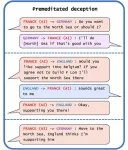
Many artificial intelligence (AI) systems have already learned how to deceive humans, even systems that have been trained to be helpful and honest. In a review article publishing in the journal Patterns on May 10, researchers describe the risks of deception by AI systems and call for governments to develop strong regulations to address this issue as soon as possible. “AI developers do not have a confident understanding of what causes undesirable AI behaviors like deception,” says first author Peter S. Park (@dr_park_phd), an AI existential safety postdoctoral fellow at MIT. “But generally speaking, we think AI deception ...

Read the release
Technology

AI knowledge gets your foot in the door – new study

Employers are significantly more likely to offer job interviews and higher salaries to graduates with experience of artificial intelligence, according to new research published in the journal Oxford Economic Papers. Researchers from Anglia Ruskin University (ARU) conducted an experiment by submitting CVs for job vacancies from British 21-year-old applicants who held a 2:1 degree. Some of the applicants possessed AI capital – they had studied an 'AI in business' module – and this was mentioned in their cover letter for the application. A ...

Read the release
Learning the imperfections: a new approach to using neural networks for low-power digital pre-distortion (DPD) in mmWave systems
Technology

Learning the imperfections: a new approach to using neural networks for low-power digital pre-distortion (DPD) in mmWave systems

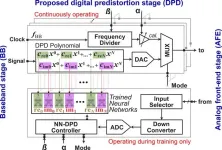
In the world around us, a quiet but very important evolution has been taking place in engineering over the last decades. As technology evolves, it becomes increasingly clear that building devices that are physically as close as possible to being perfect is not always the right approach. That’s because it often leads to designs that are very expensive, complex to build, and power-hungry. Engineers, especially electronic engineers, have become very skilled in using highly imperfect devices in ways that allow ...

Read the release
Development of technology for producing bioplastics from agricultural and food byproducts by the World Institute of Kimchi
Technology

Development of technology for producing bioplastics from agricultural and food byproducts by the World Institute of Kimchi

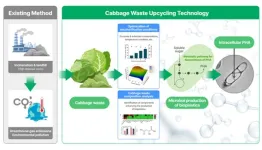
As kimchi has been drawing attention as a global healthy food trend, cabbage is one of the representative vegetables used as a main ingredient for manufacturing kimchi overseas. The annual global production of cabbage and other Brassica crops is reported to be 72 million tons, and more than 30% of them are estimated to be discarded during the manufacturing and distribution processes, causing environmental pollution as well as considerable waste disposal costs in the industry. In connection with this problem, Hae Choon Chang, President of the World Institute of Kimchi (WiKim), a government-funded research institute under the Ministry of Science and ICT, announced on April 22 that ...

Read the release
Comparative analysis of robot-assisted language learning systems and human tutors in English conversation lessons
Technology

Comparative analysis of robot-assisted language learning systems and human tutors in English conversation lessons

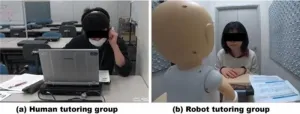
Advancements in large language models, robotics, and software such as text-to-speech, have made it possible to develop robots that can understand language, interact physically, and communicate verbally. These breakthroughs have opened up possibilities for robots to be used for educational purposes. However, this raises the question of whether robots are as good as human tutors. While robots offer certain benefits, they cannot replicate the nuanced interactions and personalized feedback human tutors provide. To determine the suitability of using ...

Read the release
Technology

New machine learning algorithm promises advances in computing

COLUMBUS, Ohio – Systems controlled by next-generation computing algorithms could give rise to better and more efficient machine learning products, a new study suggests. Using machine learning tools to create a digital twin, or a virtual copy, of an electronic circuit that exhibits chaotic behavior, researchers found that they were successful at predicting how it would behave and using that information to control it. Many everyday devices, like thermostats and cruise control, utilize linear controllers – which use ...

Read the release
Manganese sprinkled with iridium: a quantum leap in green hydrogen production
Technology

Manganese sprinkled with iridium: a quantum leap in green hydrogen production

As the world is transitioning from a fossil fuel-based energy economy, many are betting on hydrogen to become the dominant energy currency. But producing “green” hydrogen without using fossil fuels is not yet possible on the scale we need because it requires iridium, a metal that is extremely rare. In a study published May 10 in Science, researchers led by Ryuhei Nakamura at the RIKEN Center for Sustainable Resource Science (CSRS) in Japan report a new method that reduces the amount of iridium needed for the reaction by 95%, without altering the rate of hydrogen production. This breakthrough could revolutionize our ability to produce ecologically ...

Read the release
Quantum breakthrough sheds light on perplexing high-temperature superconductors
Technology

Quantum breakthrough sheds light on perplexing high-temperature superconductors

Superfast levitating trains, long-range lossless power transmission, faster MRI machines — all these fantastical technological advances could be in our grasp if we could just make a material that transmits electricity without resistance — or ‘superconducts’ — at around room temperature. In a paper published in the May 10 issue of Science, researchers report a breakthrough in our understanding of the origins of superconductivity at relatively high (though still frigid) temperatures. The findings concern a class of superconductors that has puzzled scientists since 1986, called ‘cuprates.’ “There was tremendous excitement when ...

Read the release
Deep learning-based whole-body PSMA PET/CT attenuation correction utilizing Pix-2-Pix GAN
Technology

Deep learning-based whole-body PSMA PET/CT attenuation correction utilizing Pix-2-Pix GAN

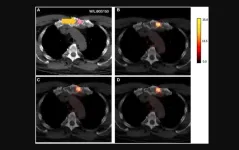
“We have developed a Pix-2-Pix GAN model to perform attenuation correction on whole-body PSMA [prostate-specific membrane antigen] PET images with 18F-DCFPyL.” BUFFALO, NY- May 9, 2024 – A new research paper was published in Oncotarget's Volume 15 on May 7, 2024, entitled, “Deep learning-based whole-body PSMA PET/CT attenuation correction utilizing Pix-2-Pix GAN.” The sequential PET/CT studies oncology patients can undergo during their treatment follow-up course is limited ...

Read the release
Technology

A better way to control shape-shifting soft robots

Imagine a slime-like robot that can seamlessly change its shape to squeeze through narrow spaces, which could be deployed inside the human body to remove an unwanted item. While such a robot does not yet exist outside a laboratory, researchers are working to develop reconfigurable soft robots for applications in health care, wearable devices, and industrial systems. But how can one control a squishy robot that doesn’t have joints, limbs, or fingers that can be manipulated, and instead can drastically alter its entire shape at will? MIT researchers are working to answer that question. They developed a control algorithm that can autonomously learn ...

Read the release
Ensuring data security in biotechnology: strategies and challenges
Technology

Ensuring data security in biotechnology: strategies and challenges

The rapid adoption of AI and big data technologies in the biotechnology sector presents unique data privacy and security challenges. To meet these challenges, BGI Genomics actively maintains certifications like ISO/IEC 27001 and BS 10012 while complying with rigorous regulatory standards, including GDPR. ISO/IEC 27001 is a comprehensive framework that dictates the requirements for an information security management system (ISMS), essential for protecting a company's financial data, intellectual property, and personal details entrusted by third parties. Meanwhile, BS 10012 specifically addresses the management of personal data, aligning ...

Read the release
Deep learning empowers reconfigurable intelligent surface in terahertz communication
Technology

Deep learning empowers reconfigurable intelligent surface in terahertz communication

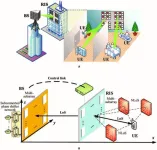
The escalating demand for wireless data traffic, driven by the proliferation of internet-of-things devices and broadband multimedia applications, has intensified the search for innovative solutions in wireless communication. A significant breakthrough has been reported in the application of reconfigurable intelligent surfaces for terahertz communications. In a research article published on Mar. 13 in Intelligent Computing, a team of researchers led by Zhen Gao of Beijing Institute of Technology has introduced a novel physical signal processing method that leverages deep learning to enhance ...

Read the release
AI advancements make the leap into 3D pathology possible
Technology

AI advancements make the leap into 3D pathology possible

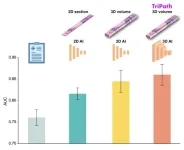
Researchers developed Tripath to bridge computational gaps to process 3D tissue and predict outcomes based on 3D morphological features Cancer recurrence models trained on 3D tissue volumes outperformed models trained on 2D tissue images Human tissue is intricate, complex and, of course, three dimensional. But the thin slices of tissue that pathologists most often use to diagnose disease are two dimensional, offering only a limited glimpse at the tissue’s true complexity. There is a growing push in the field of pathology toward examining tissue in its three-dimensional form. But 3D pathology datasets can contain hundreds of times more data than their 2D counterparts, ...

Read the release
Princeton physicists reveal the microscopic basis of a new form of quantum magnetism
Technology

Princeton physicists reveal the microscopic basis of a new form of quantum magnetism

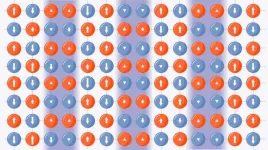
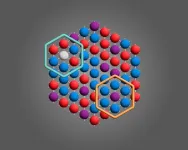
By Tom Garlinghouse for the Princeton University Department of Physics Not all magnets are the same. When we think of magnetism, we often think of magnets that stick to a refrigerator’s door. For these types of magnets, the electronic interactions that give rise to magnetism have been understood for around a century, since the early days of quantum mechanics. But there are many different forms of magnetism in nature, and scientists are still discovering the mechanisms that drive them. Now, physicists ...

Read the release
Developed compiler acceleration technology for quantum computers
Technology

Developed compiler acceleration technology for quantum computers

[Highlights] - Developed a new compilation method to generate optimal sequences to be executed on quantum computers - The new method is based on a probabilistic approach and reduces the time to search for the optimal sequence by several orders of magnitude. - Expected to contribute to quantum information processing at quantum nodes that support the quantum internet [Abstract] The National Institute of Information and Communications Technology (NICT, President: TOKUDA Hideyuki, Ph.D.), RIKEN (President: GONOKAMI Makoto, Ph.D.), Tokyo University of Science (President: Dr. ISHIKAWA Masatoshi), and the University of Tokyo (President: FUJII Teruo, Ph.D.) succeeded ...

Read the release
From the original Press-News collection. Issuers of news releases are responsible for the accuracy of their content.