A new piece of the quantum computing puzzle
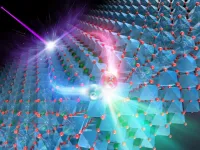
Research from the McKelvey School of Engineering at Washington University in St. Louis has found a missing piece in the puzzle of optical quantum computing. Jung-Tsung Shen, associate professor in the Preston M. Green Department of Electrical & Systems Engineering, has developed a deterministic, high-fidelity two-bit quantum logic gate that takes advantage of a new form of light. This new logic gate is orders of magnitude more efficient than the current technology. "In the ideal case, the fidelity can be as high as 97%," Shen said. His research was published in May 2021 in the journal Physical Review A. The potential of quantum computers is bound to the unusual properties of superposition -- the ability of a quantum system to contain many distinct properties, or states, ...
Read the release