Low-temperature crystallization of phase-pure α-formamidinium lead iodide enabled by study
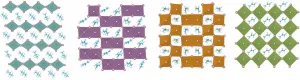
Though different fabrication approaches exist, two-step deposition is one of the main experimental techniques now used to make efficient, stable PSCs, especially on the industrial scale. The process involves first depositing lead iodide (PbI2) and then adding halide salts of monovalent cations such as methylammonium iodide (MAI) and formamidinium iodide (FAI) to convert it to perovskite. While this two-step deposition is better than other options, it is difficult to maintain reproducible high performance and long-term stability when scaling up, mostly because of a lack ...
Read the release