THE ORIGINAL COLLECTION · SINCE 2010

Science
press releases.

Research announcements from universities, hospitals and scientific institutions. Explore the stories, people and discoveries behind the headlines.

Original publication datesPage 273
FIND A STORY

Find a past release.

Dates and source material belong to the original release.

Read our research explainers

Browse the collection · original publication order

Rainfall patterns have become more erratic over the past century: Solid evidence of human impact
Science

Rainfall patterns have become more erratic over the past century: Solid evidence of human impact

Rainfall fluctuates more vigorously. Why? Scientists say it's because of us. Many people around the world have noticed that rainfall is becoming increasingly erratic. Intense downpours are occurring more frequently, while dry periods seem to last longer and become more severe. These changes have raised concerns and prompted scientists to investigate the links between climate change and these unpredictable rainfall patterns. A new study provides the first systematic observational evidence that human-induced climate change is making rainfall patterns more volatile globally. Published in the journal Science on July 26, a joint study by the Institute of Atmospheric Physics ...

Read the release

Science

Human-induced warming has driven increasing precipitation variability

Anthropogenic climate warming has led to increased precipitation variability over much of the globe, according to a new study, which points to several hotspots for this trend. This effect is particularly prominent over Europe, Australia, and eastern North America, say the study’s authors, and is largely driven by increasing atmospheric moistening and decadal-scale changes in atmospheric circulation. As the climate warms, the atmosphere becomes more capable of holding moisture, leading to greater fluctuations between extreme precipitation events and wider swings between wet and dry episodes. Such amplified ...

Read the release
Spin qubits go trampolining
Science

Spin qubits go trampolining

Researchers at QuTech developed somersaulting spin qubits for universal quantum logic. This achievement may enable efficient control of large semiconductor qubit arrays. The research group published their demonstration of hopping spins in Nature Communications and their work on somersaulting spins in Science. In 1998, Loss and DiVincenzo published the seminal work ‘quantum computation with quantum dots’. In their original work, hopping of spins was proposed as a basis for qubit logic, but an experimental implementation has remained lacking. After more than 20 years, experiments have caught up with theory. Researchers ...

Read the release
A cool solution
Science

A cool solution

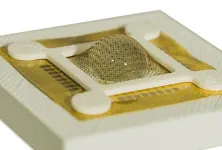
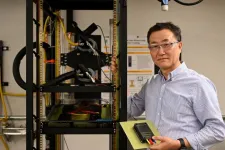
Artificial intelligence (AI) is hot right now. Also hot: the data centers that power the technology. And keeping those centers cool requires a tremendous amount of energy. The problem is only going to grow as high-powered AI-based computers and devices become commonplace. That’s why University of Missouri researcher Chanwoo Park is devising a new type of cooling system that promises to dramatically reduce energy demands. “Cooling and chip manufacturing go hand-in-hand,” said Park, a professor of mechanical and aerospace engineering in the Mizzou College of Engineering. “Without proper cooling, components overheat and fail. Energy-efficient data centers will be key ...

Read the release
Science

In Illinois, ‘older adults are at increased risk for suicide’

Most (83%) suicide deaths were among men Firearms were the most frequently used weapon (59%) Among those who died by suicide, 20% had been diagnosed with depression; only 14.1% of them were receiving treatment CHICAGO --- Nearly 20% of suicides in Illinois between 2020 and 2021 were among people 65 years and older, according to recently released data from Northwestern University Feinberg School of Medicine. The suicides disproportionately affected white men between the ages of 65 and 74 years, with ...

Read the release
Science

Raindrops grow with turbulence in clouds

Scientists for decades have attempted to learn more about the complex and mysterious chain of events by which tiny droplets in clouds grow large enough to begin falling toward the ground. Better understanding this process, known as the “rain formation bottleneck,” is fundamental to improving computer model simulations of weather and climate and ultimately generating better forecasts. Now a research team led by scientists at the U.S. National Science Foundation National Center for Atmospheric Research (NSF NCAR) ...

Read the release
Midwestern launches public research profiles through Symplectic Elements
Science

Midwestern launches public research profiles through Symplectic Elements

Digital Science, a technology company serving stakeholders across the research ecosystem, is pleased to share the news that Midwestern University has successfully launched a new faculty profiles portal powered by Symplectic Elements. Midwestern has been utilizing Symplectic Elements as its Research Information Management System since 2019, and has made the decision to expand its use by adding public profiles. The faculty profiles repurpose the comprehensive data already within Elements to populate enhanced profiles, including biographical information as ...

Read the release
Science

After Trump’s election, women of color had more underweight, premature babies, study finds

In 2016, President-elect Donald Trump vowed to deport thousands of immigrants. His anti-immigration message vilified foreign-born people living in the U.S. as criminals and rapists. Besides making good on many harsh, immigration-related promises, the years after his election stoked the anxieties of millions of people. Now, with Trump once again in contention for the White House, a new study from the University of California, Berkeley, reveals the surprising — and potentially lifelong — association between those early Trump years and the health of society's newest citizens. In ...

Read the release
Science

RSNA makes strides in narrowing radiology gender gap

OAK BROOK, Ill. – The radiology gender gap is decreasing, but there remains work to be done, according to an editorial published today in RadioGraphics, a journal of the Radiological Society of North America (RSNA). In 2022, nearly half of residents and fellows in Accreditation Council for Graduate Medical Education (ACGME)–accredited programs were female. However, less than 27% of active diagnostic radiologists and only 10% of active interventional radiologists are female. Within the 48 largest medical specialty groups, diagnostic radiology ranks 41st and ...

Read the release
Science

Vital support for early career researchers in aging boosted with Hearst Foundations gift to American Federation for Aging Research (AFAR)

NEW YORK, NY– The American Federation for Aging Research (AFAR) is pleased to announce a $450,000 grant from The Hearst Foundations in support of the Grants for Junior Faculty program. The Grants for Junior Faculty provide early career investigators with up to $150,000 for one to two years to support research focused on aging processes and age-related diseases. The $450,000 grant from Hearst Foundations will fully underwrite three Grants for Junior Faculty over the next three years. Selected ...

Read the release
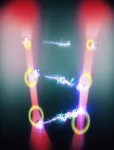
Nonreciprocal interactions go nonlinear
Science

Nonreciprocal interactions go nonlinear

Using two optically trapped glass nanoparticles, researchers observed a novel collective Non-Hermitian and nonlinear dynamic driven by nonreciprocal interactions. This contribution expands traditional optical levitation with tweezer arrays by incorporating the so called non-conservative interactions. Their findings, supported by an analytical model developed by collaborators from Ulm University and the University of Duisburg-Essen, were recently published in Nature Physics. Fundamental forces like gravity and electromagnetism are reciprocal, meaning two ...

Read the release
Cultivating better leadership: KLU and partners create Texl.org - a free, scientific evidence-based 360-degree assessment tool
Science

Cultivating better leadership: KLU and partners create Texl.org - a free, scientific evidence-based 360-degree assessment tool

Available to anyone, anywhere, at anytime, Texl.org allows individuals and organizations to create scientifically valid surveys in less than five minutes. In drag-and-drop fashion, survey creators can choose from an ever-growing list of 50 validated scales, measuring aspects ranging from team conflict to personal initiative and transformational leadership. “The point of science is to develop knowledge that ultimately is to the benefit of society. Unfortunately, we are not always great in translating our knowledge so that it is usable for practitioners out there. With Texl we’re changing that,” explains Professor Niels Van Quaquebeke, ...

Read the release
Science

MD Anderson and Summit Therapeutics announce strategic collaboration to accelerate development of ivonescimab

HOUSTON and MIAMI ― The University of Texas MD Anderson Cancer Center and Summit Therapeutics, Inc. today announced a strategic five-year collaboration agreement for the purpose of accelerating the development of ivonescimab. Leveraging MD Anderson’s clinical infrastructure and research expertise together with Summit’s innovative, investigational, potential first-in-class PD-1/VEGF bispecific antibody, the collaboration is designed to quickly discover additional opportunities for ivonescimab, including several tumors outside of its current development plan. MD Anderson will lead multiple clinical trials in several tumor types to evaluate the safety and potential clinical ...

Read the release
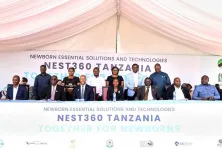
Tanzanian officials praise NEST360 contribution to newborn care
Science

Tanzanian officials praise NEST360 contribution to newborn care

HOUSTON – (June 25, 2024) – Rice University President Reginald DesRoches joined Rice360 Institute for Global Health Technologies Co-Director Maria Oden and Rice360 supporters on a trip to Africa this summer marking significant milestones on the road to ending preventable newborn deaths in the sub-Saharan region. Rice360 is one of 22 organizations in the Newborn Essential Solutions and Technologies (NEST360) international alliance, and this trip signified Rice’s continued collaboration ...

Read the release
The research was wrong: study shows moderate drinking won’t lengthen your life
Science

The research was wrong: study shows moderate drinking won’t lengthen your life

PISCATAWAY, NJ – Probably everyone has heard the conventional wisdom that a glass of wine a day is good for you--or you’ve heard some variation of it. The problem is that it’s based on flawed scientific research, according to a new report in the Journal of Studies on Alcohol and Drugs. Over the years, many studies have suggested that moderate drinkers enjoy longer lives with lower risks of heart disease and other chronic ills than abstainers do. That spurred the widespread belief that alcohol, in moderation, can be a health tonic. However, not all studies have painted such a rosy picture--and the ...

Read the release
Science

Harms of prescribing NSAIDs to high risk groups estimated to cost NHS £31m over 10 years

Prescribing non-steroidal anti-inflammatory drugs (NSAIDs) to people at high risk of harm from them is estimated to cost the NHS in England around £31 million and cause more than 6,000 lost years of good health over 10 years, finds a study published by The BMJ today. NSAIDs continue to be a source of avoidable harm and healthcare costs, and more needs to be done to address this, especially in high risk groups, say the researchers. NSAIDs are used for pain and inflammation and are one of the most widely prescribed groups of medicines in the world, But they are known to increase the risk of gastrointestinal bleeding, heart attacks, stroke, and kidney damage. Yet ...

Read the release
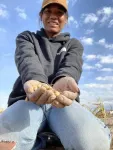
Genetics reveal ancient trade routes and path to domestication of the Four Corners potato
Science

Genetics reveal ancient trade routes and path to domestication of the Four Corners potato

A new study shows that a native potato species was brought to southern Utah by Indigenous people in the distant past, adding to an ever-growing list of culturally significant plant species that pre-contact cultures domesticated in the Southwestern U.S. The team of researchers, led by Red Butte Garden and the Natural History Museum of Utah (NHMU) at the University of Utah, used genetic analysis to reveal how and where tubers of the Four Corners potato (Solanum jamesii) had been collected, transported and traded throughout the Colorado Plateau. The findings support the assertion that the tuber is a “lost sister,” joining maize, beans and squash—commonly ...

Read the release
Addressing wounds of war
Science

Addressing wounds of war

Dr. Olga Denysiuk, MD, PhD, is a highly skilled eye surgeon in Ukraine who now finds herself at the frontlines of ophthalmic trauma care caused by war. “Every day, I am fighting my war in the operating room,” says Denysiuk. “Cases of eye trauma are mounting and it’s critical that we have surgeons trained to delicately manage eyelid and orbital injuries.” Denysiuk is one of two ocular specialists selected for a unique humanitarian fellowship at the University of Calgary’s ...

Read the release
It’s got praying mantis eyes
Science

It’s got praying mantis eyes

Self-driving cars occasionally crash because their visual systems can’t always process static or slow-moving objects in 3D space. In that regard, they’re like the monocular vision of many insects, whose compound eyes provide great motion-tracking and a wide field of view but poor depth perception. Except for the praying mantis. A praying mantis’ field of view also overlaps between its left and right eyes, creating binocular vision with depth perception in 3D space. Combining this insight with some nifty optoelectrical engineering and innovative “edge” ...

Read the release
Science

Stroke recovery: It’s in the genes

New research led by UCLA Health has found that specific genes may be related to the trajectory of recovery for stroke survivors, providing doctors insights useful for developing targeted therapies. Published in the journal Stroke this month, the findings were part of an exploratory study that sought to find if candidate genes could predict a higher likelihood of stroke outcomes related to depression, post-traumatic stress disorder and cognitive decline. Dr. Steven C. Cramer, MD, the study’s lead author and a professor of neurology at UCLA, said while there are some ...

Read the release
Foam fluidics showcase Rice lab’s creative approach to circuit design
Science

Foam fluidics showcase Rice lab’s creative approach to circuit design

HOUSTON – (July 24, 2024) – When picturing next-generation wearables and robotics, the foam filling in your couch cushions is likely not the first thing that comes to mind. However, Rice University engineers have shown that something as simple as the flow of air through the airy, meshlike structure of open-cell foam can be used to perform digital computation, analog sensing and combined digital-analog control in soft textile-based wearable systems. “In this work, we integrated material intelligence — the ability of materials to sense and respond to their environment ...

Read the release
Science

Montana State scientists publish evidence for new groups of methane-producing organisms

A team of scientists from Montana State University has provided the first experimental evidence that two new groups of microbes thriving in thermal features in Yellowstone National Park produce methane – a discovery that could one day contribute to the development of methods to mitigate climate change and provide insight into potential life elsewhere in our solar system. The journal Nature this week published the findings from the laboratory of Roland Hatzenpichler, associate professor in MSU’s Department of Chemistry and Biochemistry in the College ...

Read the release
Daily rhythms depend on receptor density in biological clock
Science

Daily rhythms depend on receptor density in biological clock

In humans and other animals, signals from a central circadian clock in the brain generate the seasonal and daily rhythms of life. They help the body to prepare for expected changes in the environment and also optimize when to sleep, eat and do other daily activities. Scientists at Washington University in St. Louis are working out the particulars of how our internal biological clocks keep time. Their new research, published July 24 in the Proceedings of the National Academy of Sciences, helps answer longstanding questions about how circadian rhythms are generated and maintained. In all mammals, the signals for circadian rhythms come from a small part of the brain called the suprachiasmatic ...

Read the release
Hens blush when they are scared or excited
Science

Hens blush when they are scared or excited

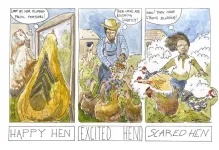
Hens fluff their head feathers and blush to express different emotions and levels of excitement, according to a study publishing July 24, 2024, in the open-access journal PLOS ONE by Cécile Arnould and colleagues from INRAE and CNRS, France. Facial expressions are an important part of human communication that allow us to convey our emotions. Scientists have found similar signals of emotion in other mammals such as dogs, pigs and mice. Although birds can produce facial expressions by moving their head feathers and flushing their skin, it is unclear whether they express emotions in this way. To investigate, researchers filmed ...

Read the release
Weibo posts illuminate public response to China’s three-child policy measures
Science

Weibo posts illuminate public response to China’s three-child policy measures

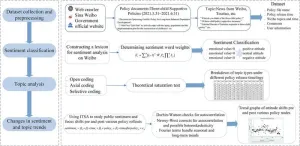
An analysis of comments on Chinese social media platform Sina Weibo reveals trends in the public response to measures implemented to support China’s three-child policy, highlighting concerns about women’s rights and employment. Lijuan Peng of Zhejiang Gongshang University in Hangzhou, China, and colleagues present these findings in the open-access journal PLOS ONE on July 24, 2024. For decades, China’s one-child policy restricted most families to having just one child. In 2021, to combat a falling birthrate, China introduced its three-child policy, allowing couples to have up to three children. To help encourage childbirth, ...

Read the release
From the original Press-News collection. Issuers of news releases are responsible for the accuracy of their content.