THE ORIGINAL COLLECTION · SINCE 2010

Energy
press releases.

Research announcements from universities, hospitals and scientific institutions. Explore the stories, people and discoveries behind the headlines.

Original publication datesPage 16
FIND A STORY

Find a past release.

Dates and source material belong to the original release.

Read our research explainers

Browse the collection · original publication order

Drivers of electric vehicles are more likely to be at fault in road traffic crashes than drivers of petrol and diesel cars
Energy

Drivers of electric vehicles are more likely to be at fault in road traffic crashes than drivers of petrol and diesel cars

Drivers of electric vehicles (EVs) are more likely to be involved in at-fault road traffic accidents than drivers of petrol and diesel cars, research by Lero, the Research Ireland Centre for Software, at University of Limerick and Universitat de Barcelona, reveals. In the analysis of insurance claims and data from onboard sensors, due to be published in the November issue of the journal Accident Analysis & Prevention, the Lero researchers reveal a number of key findings: Electric and hybrid drivers exhibit different behaviours ...

Read the release
Researchers synthesize high-energy-density cubic gauche nitrogen at atmospheric pressure
Energy

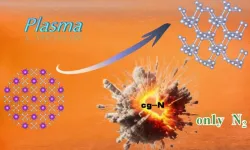
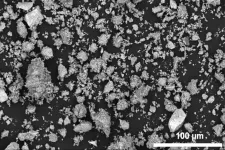
Researchers synthesize high-energy-density cubic gauche nitrogen at atmospheric pressure

Recently, a research group led by Prof. WANG Xianlong from the Hefei Institutes of Physical Science of the Chinese Academy of Sciences, successfully synthesized high-energy-density materials cubic gauche nitrogen (cg-N) at atmospheric pressure by treating potassium azide (KN3) using the plasma-enhanced chemical vapour deposition technique (PECVD). The research results were published in Science Advances. Cg-N is a pure nitrogen material consisting of nitrogen atoms bonded by N-N single bonds, resembling the structure of diamond. It has attracted attention because it has a high-energy-density and produces only nitrogen gas when it decomposes. ...

Read the release
Energy

Clean energy transition: Increasing global equity with finance

It is widely recognized that finance is one of the critical enablers of accelerating climate action. However, renewable energy deployment (particularly in developing countries) requires more financing than fossil fuel-based alternatives due to a combination of factors, such as higher upfront investment costs. This means that finance itself can become a barrier to mitigation investment, which is particularly problematic in the context of energy justice—making renewable energy more widely accessible in low-income countries and communities. A new international research effort led by CMCC scientists tackles this issue ...

Read the release
Energy

Parents open to firearms counseling from doctors; Ensuring secure storage remains a challenge

ORLANDO, Fla.— Firearms are the leading cause of death in children in the United States and are linked to over half of youth suicides. Secure storage of firearms (stored locked, unloaded, and separate from the ammunition) can significantly decrease the rates of child and adolescent firearm-related suicides. According to research presented during the American Academy of Pediatrics 2024 National Conference & Exhibition at the Orange County Convention Center from Sept. 27-Oct. 1, “Caregiver Perspectives on Firearm Safety Guidance for Children Hospitalized for Suicidal Ideation ...

Read the release
Manganese cathodes could boost lithium-ion batteries
Energy

Manganese cathodes could boost lithium-ion batteries

Rechargeable lithium-ion batteries are growing in adoption, used in devices like smartphones and laptops, electric vehicles, and energy storage systems. But supplies of nickel and cobalt commonly used in the cathodes of these batteries are limited. New research led by the Department of Energy’s Lawrence Berkeley National Laboratory (Berkeley Lab) opens up a potential low-cost, safe alternative in manganese, the fifth most abundant metal in the Earth’s crust. Researchers showed that manganese can be effectively used in emerging cathode materials called disordered rock salts, or DRX. Previous research suggested that to perform well, DRX materials had to be ground down to nanosized ...

Read the release
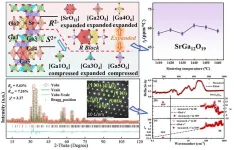
SrGa12O19: The first low-εr Ga-based microwave dielectric ceramic with anomalous positive τf
Energy

SrGa12O19: The first low-εr Ga-based microwave dielectric ceramic with anomalous positive τf

As one of the key materials of modern microwave communication technology, microwave dielectric ceramics are widely used in many core components of microwave circuits. In recent years, with the rapid development of microwave communication technology marked by mobile communication, in order to meet the requirements of the development of mobile communication technology, including 5G/6G, new requirements have been put forward for the performance parameters of microwave dielectric ceramics: low dielectric constant to reduce signal delay, low dielectric loss or high quality factor, and near-zero ...

Read the release
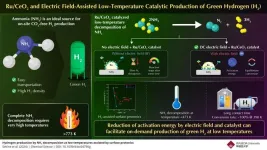
Low-temperature conversion of ammonia to hydrogen via electric field-aided surface protonics
Energy

Low-temperature conversion of ammonia to hydrogen via electric field-aided surface protonics

Hydrogen gas, owing to its high energy density and carbon-free nature, is gaining much attention as the energy source for a green and sustainable future. Despite being the most abundant element in the universe, hydrogen is mostly found in a bound state as chemical compounds such as ammonia, metal hydrides, and other hydrogenated compounds. Among all the hydrogen carriers, ammonia stands out as a promising candidate owing to its wide availability, high hydrogen content with hydrogen making up 17.6% of its mass, and ease of liquefaction as well as transportation. A major drawback that hinders its exploitation as an ...

Read the release
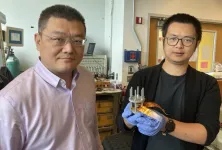
New battery cathode material could revolutionize EV market and energy storage
Energy

New battery cathode material could revolutionize EV market and energy storage

A multi-institutional research team led by Georgia Tech’s Hailong Chen has developed a new, low-cost cathode that could radically improve lithium-ion batteries (LIBs) — potentially transforming the electric vehicle (EV) market and large-scale energy storage systems. “For a long time, people have been looking for a lower-cost, more sustainable alternative to existing cathode materials. I think we’ve got one,” said Chen, an associate professor with appointments in the ...

Read the release
Energy

Energy inefficiency and inability to downsize pose even bigger threat to low-income pensioners than loss of Winter Fuel Payments, Cambridge study suggests

The UK Government’s policy to scrap Winter Fuel Payments could disproportionately affect low-income pensioners in England, new analysis suggests. But the same study argues that the energy inefficiency of homes and challenges involved in downsizing will have an even more harmful effect this winter. The study, published in Energy Research and Social Science, was completed shortly before the Winter Fuel Payment vote was taken, by researchers from the University of Cambridge and Delft University of Technology (TU Delft). The researchers raise particular concerns about the impact of the policy on pensioners with annual incomes of between ...

Read the release
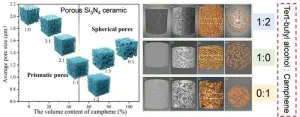
Synergistic promotion of dielectric and thermomechanical properties of porous Si3N4 ceramics by a dual-solvent template method
Energy

Synergistic promotion of dielectric and thermomechanical properties of porous Si3N4 ceramics by a dual-solvent template method

Radomes and wave-transmitting antenna windows are critical structural components in aircraft, protecting radar antennas from external interference while ensuring reliable communication. Currently, the most widely used wave-transmitting materials are ceramics based on oxides and nitrides. Si3N4 ceramics, with their high melting point and superior mechanical properties, are considered promising candidates for hypersonic vehicle applications. However, the dielectric and thermal insulation properties of dense Si3N4 ceramics need improvement to meet the precise guidance and thermal protection demands of high-speed flight. By adjusting the microstructure, it is possible to enhance the ...

Read the release
Scientists at the CNIC discover an unexpected involvement of sodium transport in mitochondrial energy generation
Energy

Scientists at the CNIC discover an unexpected involvement of sodium transport in mitochondrial energy generation

The GENOXPHOS (Functional Genetics of the Oxidative Phosphorylation System) group at the Centro Nacional de Investigaciones Cardiovasculares (CNIC) has discovered a crucial role of sodium in the generation of cellular energy. The study, led by GENOPHOS group leader Dr. José Antonio Enríquez, also involved the participation of scientists from the Complutense University of Madrid, the Biomedical Research Institute at Hospital Doce de Octubre, the David Geffen School of Medicine at UCLA, and the Spanish research networks on frailty and healthy aging (CIBERFES) ...

Read the release
New organic thermoelectric device that can harvest energy at room temperature
Energy

New organic thermoelectric device that can harvest energy at room temperature

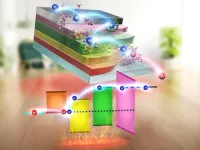
Fukuoka, Japan—Researchers have developed a new organic thermoelectric device that can harvest energy from ambient temperature. While thermoelectric devices have several uses today, hurdles still exist to their full utilization. By combining the unique abilities of organic materials, the team succeeded in developing a framework for thermoelectric power generation at room temperature without any temperature gradient. Their findings were published in the journal Nature Communications. Thermoelectric devices, or thermoelectric ...

Read the release
Why petting your cat leads to static electricity
Energy

Why petting your cat leads to static electricity

Anyone who has ever pet a cat or shuffled their feet across the carpet knows that rubbing objects together generates static electricity. But an explanation for this phenomenon has eluded researchers for more than two millennia. Now, Northwestern University scientists have finally uncovered the mechanics at play. When an object slides, the front and back parts of that object experience different forces, researchers found. This difference in forces causes different electrical charges to build up on the front and back parts of the object. And the difference in electrical charges creates a current, leading to a light zap. The study was published yesterday (Sept. 17) in the journal ...

Read the release
Homemade ‘play-putty’ can read the body’s electric signals, find UMass researchers
Energy

Homemade ‘play-putty’ can read the body’s electric signals, find UMass researchers

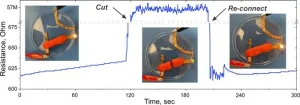
AMHERST, Mass. – A new study by University of Massachusetts Amherst researchers demonstrates the effectiveness of homemade play putty at reading brain, heart, muscle and eye activity. Published in Device, the research outlines the conductive properties of this material, so-named “squishy circuits.” “[Squishy circuits] are literally child’s play putty, that is also conductive” describes Dmitry Kireev, assistant professor of biomedical engineering and senior author on the paper. The conductive squishy ...

Read the release
How Ukraine can rebuild its energy system
Energy

How Ukraine can rebuild its energy system

One of the main targets of Russia’s ongoing attacks on Ukraine is the energy infrastructure. The extent of the destruction is enormous. “One year after the start of the war in February 2022, 76 percent of thermal power plants had been destroyed; now the figure is 95 percent,” says Ukrainian scientist Iryna Doronina. “And all the large hydroelectric power plants have also failed.” The breaching of the Kakhovka dam proved to be particularly devastating. The huge outflow of water – the reservoir ...

Read the release
Harnessing the power of porosity: A new era for aqueous zinc-ion batteries and large-scale energy storage
Energy

Harnessing the power of porosity: A new era for aqueous zinc-ion batteries and large-scale energy storage

As the global demand for energy storage solutions grows, the limitations of current lithium-ion batteries, such as safety concerns and high costs, have driven the exploration of alternative technologies. Aqueous zinc-ion batteries (AZIBs) have emerged as a promising candidate due to their inherent safety, cost-effectiveness, and environmental sustainability. However, challenges like zinc dendrite growth continue to hinder their widespread adoption. Due to these challenges, there is a pressing need to delve deeper ...

Read the release
Towards the realization of compact and portable nuclear clocks
Energy

Towards the realization of compact and portable nuclear clocks

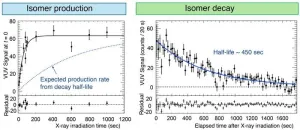
Scientists use atomic clocks to measure ‘second,’ the smallest standard unit of time, with great precision. These clocks use natural oscillations of electrons in atoms, similar to how pendulums work in old grandfather clocks. The quest for an even more precise timekeeper led to the discovery of nuclear clocks, which use the transitions of atomic nuclei instead of electrons to keep time. A rising contender for the development of ultra-precise nuclear optical clocks is the nuclear first-excited state of 229Th isotope. Its long half-life of 103 seconds and low excitation energy of a few electron ...

Read the release
CRISPR/Cas9 modifies euglena to create potential biofuel source
Energy

CRISPR/Cas9 modifies euglena to create potential biofuel source

News about biofuels sometimes mentions used cooking oil as a feedstock, but if these substances contain animal fat, they can solidify in colder temperatures. This happens because, chemically, the fatty acids of these and many other saturated fats have long carbon chains with single bonds. Enter the euglena. An Osaka Metropolitan University team has found a way to have one species of this microalgae produce wax esters with shorter carbon chains than usual. Using CRISPR/Cas9 to edit the genome of Euglena gracilis, Dr. Masami Nakazawa and her team at the Graduate School of Agriculture’s ...

Read the release
Energy

Streamlining energy regulations on Native American reservations could help alleviate poverty

MADISON–Land was once set aside as Native American reservations because it was undesirable and low in resources, but now interested Native Americans may have economic leverage in the growing industry of clean energy. A team of researchers led by UW–Madison professors Dominic Parker and Sarah Johnston quantified the economic potential of wind and solar energy projects on these lands and discussed the regulatory barriers for tribes wishing to tap into it. “This is the first comprehensive ...

Read the release
Department of Energy grant advances clean energy studies
Energy

Department of Energy grant advances clean energy studies

Dr. Berna Hascakir, professor in the Harold Vance Department of Petroleum Engineering at Texas A&M University, was selected as part of a $17 million grant from the U.S. Department of Energy’s (DOE) Office of Fossil Energy and Carbon Management. The investment will support university-led projects that advance decarbonization and net-zero greenhouse gas emissions. In partnership with Texas A&M, Texas Tech University, Howard University, and the University at Buffalo, this initiative unites three minority-serving ...

Read the release
CABBI team designs efficient bioenergy crops that need less water to grow
Energy

CABBI team designs efficient bioenergy crops that need less water to grow

Drought stress has long been a limiting factor for crop production around the world, a challenge exacerbated by climate change. For more than a century­, scientists have targeted a key plant trait known as water use efficiency (WUE) to help crops grow with less water and avoid suffering from drought stress. Greater WUE can help plants avoid drought stress — but for most crops it’s also associated with lower productivity when water is plentiful. In a pair of new studies published in the Journal of Experimental Botany, ...

Read the release
Energy

Department of Energy announces $118 million for Energy Frontier Research Centers

WASHINGTON, D.C. -Ten Energy Frontier Research Centers (EFRCs) designed to bring together world-class teams of scientists for groundbreaking fundamental research have been funded in nine states by the U.S. Department of Energy (DOE). Since 2009, EFRCs have brought together diverse, world-class teams of scientists to perform basic research that accelerates ground-breaking scientific advances underlying energy technologies. The centers develop powerful new tools for characterizing, understanding, modeling, and manipulating matter, while training the next-generation scientific workforce by attracting talented students passionate about energy science. “Fundamental ...

Read the release
The world's first nuclear clock
Energy

The world's first nuclear clock

For many years, scientists all around the world have been working towards this goal, now suddenly things are happening very fast: it was only in April that a team led by Prof Thorsten Schumm (TU Wien, Vienna) announced a major success. For the first time, an atomic nucleus had been switched from one state to another using a laser – an effect that can be used for high-precision measurements. Now, just a few weeks later, this thorium transition was successfully applied in practice: TU Wien and JILA/NIST (USA) succeeded in combining a high-precision optical atomic clock with ...

Read the release
Energy

Department of Energy announces $142 million in grants to small businesses

WASHINGTON, D.C. - The U.S. Department of Energy (DOE) today announced awards totaling $142 million for small businesses in 34 states. The 123 projects to be funded address multiple mission-critical areas important for the nation, including clean energy and decarbonization, cybersecurity and grid reliability, fusion energy, and nuclear nonproliferation. American small businesses play a critical role in these DOE Small Business Innovation Research (SBIR) and Small Business Technology Transfer (STTR) awards, which transform DOE-supported science and technology breakthroughs into ...

Read the release
Energy

Department of Energy awards $125 Million for research to enable next-generation batteries and energy storage

WASHINGTON, D.C. - Today, the U.S. Department of Energy (DOE) announced $125 million in funding for two Energy Innovation Hub teams to provide the scientific foundation needed to seed and accelerate next generation technologies beyond today’s generation of lithium (Li)-ion batteries. These multi-institution research teams, led by Argonne National Laboratory and Stanford University, will develop scientific concepts and understanding to impact decarbonization of transportation and incorporation of clean energy into the electricity grid. Rechargeable batteries, such as Li-ion and lead-acid batteries, have had a ...

Read the release
From the original Press-News collection. Issuers of news releases are responsible for the accuracy of their content.