Rare genetic defect replicated in fish model
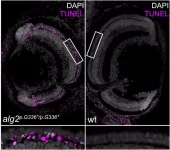
A rare genetic defect that affects the so-called ALG2 gene can cause serious metabolic diseases in humans. It does so through the defective formation of proteins and sugar molecules. Until now, its rareness and complexity made it difficult to study this congenital glycosylation disorder. A research team led by Prof. Dr Joachim Wittbrodt and Dr Thomas Thumberger from the Centre for Organismal Studies (COS) of Heidelberg University has finally succeeded in introducing the underlying mutation in the ALG2 gene in a fish model, thus allowing the causes of these complex diseases to be studied at the molecular level. Human cells are kept alive by the activity of millions of proteins. As they mature, these proteins ...
Read the release