Medicine Technology 🌱 Environment Space Energy Physics Engineering Social Science Earth Science Science
Environment 2014-09-21

CO2 emissions set to reach new 40 billion ton record high in 2014

Carbon dioxide emissions, the main contributor to global warming, are set to rise again in 2014 - reaching a record high of 40 billion tonnes. The 2.5 per cent projected rise in burning fossil fuels is revealed by the Global Carbon Project, which is co-led in the UK by researchers at the Tyndall Centre for Climate Change Research at the University of East Anglia and the College of Engineering, Mathematics and Physical Sciences at the University of Exeter. It comes ahead of the New York Climate Summit, where world leaders will seek to catalyse action on climate change. ...
Read more →
From light into matter, nothing seems to stop quantum teleportation
Technology 2014-09-21

From light into matter, nothing seems to stop quantum teleportation

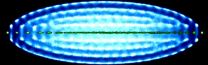
Physicists at the University of Geneva (UNIGE) have succeeded in teleporting the quantum state of a photon to a crystal over 25 kilometres of optical fibre. The experiment, carried out in the laboratory of Professor Nicolas Gisin, constitutes a first, and simply pulverises the previous record of 6 kilometres achieved ten years ago by the same UNIGE team. Passing from light into matter, using teleportation of a photon to a crystal, shows that, in quantum physics, it is not the composition of a particle which is important, but rather its state, since this can exist and persist ...
Read more →
Science 2014-09-21

Program predicts placement of chemical tags that control gene activity

Biochemists working at the University of California, San Diego, have developed a program that predicts the placement of chemical marks that control the activity of genes based on sequences of DNA. They describe their analysis and report results from its application to human embryonic cells in a paper published in Nature Methods online September 21. "All of our cells have the same blueprint, the same DNA, although they serve separate functions," said John Whitaker, lead author of the report. "Skin cells protect, nerve cells send signals, and these differences emerge because ...
Read more →
Science 2014-09-21

Battling superbugs

CAMBRIDGE, MA -- In recent years, new strains of bacteria have emerged that resist even the most powerful antibiotics. Each year, these superbugs, including drug-resistant forms of tuberculosis and staphylococcus, infect more than 2 million people nationwide, and kill at least 23,000. Despite the urgent need for new treatments, scientists have discovered very few new classes of antibiotics in the past decade. MIT engineers have now turned a powerful new weapon on these superbugs. Using a gene-editing system that can disable any target gene, they have shown that they can ...
Read more →
Medicine 2014-09-21

Immune system of newborn babies is stronger than previously thought

Contrary to what was previously thought, newborn immune T cells may have the ability to trigger an inflammatory response to bacteria, according to a new study led by King's College London. Although their immune system works very differently to that of adults, babies may still be able to mount a strong immune defense, finds the study published in the journal Nature Medicine. Our immune system is made up of several different types of immune cells, including neutrophils which play an important role in the frontline defense against infection, and lymphocytes: B cells which ...
Read more →
Uncovering the forbidden side of molecules
Science 2014-09-21

Uncovering the forbidden side of molecules

Researchers at the University of Basel in Switzerland have succeeded in observing the "forbidden" infrared spectrum of a charged molecule for the first time. These extremely weak spectra offer perspectives for extremely precise measurements of molecular properties and may also contribute to the development of molecular clocks and quantum technology. The results were published in the scientific journal Nature Physics. Spectroscopy, the study of the interaction between matter and light, is probably the most important method for investigating the properties of molecules. ...
Read more →
Physics 2014-09-21

Magnetic fields make the excitons go 'round

CAMBRIDGE, Mass-- A major limitation in the performance of solar cells happens within the photovoltaic material itself: When photons strike the molecules of a solar cell, they transfer their energy, producing quasi-particles called excitons — an energized state of molecules. That energized state can hop from one molecule to the next until it's transferred to electrons in a wire, which can light up a bulb or turn a motor. But as the excitons hop through the material, they are prone to getting stuck in minuscule defects, or traps — causing them to release their energy ...
Read more →
Medicine 2014-09-21

Engineered proteins stick like glue -- even in water

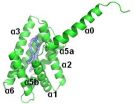
CAMBRIDGE, MA -- Shellfish such as mussels and barnacles secrete very sticky proteins that help them cling to rocks or ship hulls, even underwater. Inspired by these natural adhesives, a team of MIT engineers has designed new materials that could be used to repair ships or help heal wounds and surgical incisions. To create their new waterproof adhesives, the MIT researchers engineered bacteria to produce a hybrid material that incorporates naturally sticky mussel proteins as well as a bacterial protein found in biofilms — slimy layers formed by bacteria growing on a surface. ...
Read more →
Cancer cells adapt energy needs to spread illness to other organs
Medicine 2014-09-21

Cancer cells adapt energy needs to spread illness to other organs

Want to understand why cancer cells metastasize? Think of Sparta. Ancient Greek warriors were fed a special diet that better prepared them for the demands of battle on distant fields. Cancer cells that metastasize may do the same thing according to a new study revealing previously unknown differences between cancer cells that continue to grow at the original tumor site, and those that travel to other organs. Given that a cancer cell's unyielding ability to metastasize is the primary cause of cancer-related death, understanding how they successfully migrate can be lifesaving. Scientists ...
Read more →
Stanford researchers create 'evolved' protein that may stop cancer from spreading
Medicine 2014-09-21

Stanford researchers create 'evolved' protein that may stop cancer from spreading

VIDEO: Early but promising tests in lab mice suggest that a bioengineered 'decoy' protein, administered intravenously, can halt the spread of cancer from the original tumor site. Years of subsequent tests... Click here for more information. A team of Stanford researchers has developed a protein therapy that disrupts the process that causes cancer cells to break away from original tumor sites, travel through the blood stream and start aggressive new growths elsewhere in the body. This ...
Read more →
Smallest possible diamonds form ultra-thin nanothreads
Science 2014-09-21

Smallest possible diamonds form ultra-thin nanothreads

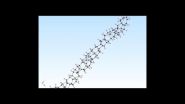
VIDEO: For the first time, scientists have discovered how to produce ultra-thin 'diamond nanothreads' that promise extraordinary properties, including strength and stiffness greater than that of today's strongest nanotubes and polymers.... Click here for more information. For the first time, scientists have discovered how to produce ultra-thin "diamond nanothreads" that promise extraordinary properties, including strength and stiffness greater than that of today's strongest ...
Read more →
New cancer drug target involving lipid chemical messengers
Medicine 2014-09-19

New cancer drug target involving lipid chemical messengers

PHILADELPHIA — More than half of human cancers have abnormally upregulated chemical signals related to lipid metabolism, yet how these signals are controlled during tumor formation is not fully understood. Youhai Chen, PhD, MD, and Svetlana Fayngerts, PhD, both researchers in the department of Pathology and Laboratory Medicine at the Perelman School of Medicine, University of Pennsylvania, and colleagues report that TIPE3, a newly described oncogenic protein, promotes cancer by targeting these pathways. Lipid second messengers play cardinal roles in relaying and amplifying ...
Read more →
Science 2014-09-19

Melanoma risk found to have genetic determinant

(Lebanon, NH 9/18/14)— A leading Dartmouth researcher, working with The Melanoma Genetics Consortium, GenoMEL, an international research consortium, co-authored a paper published today in the Journal of the National Cancer Institute that proves longer telomeres increase the risk of melanoma. "For the first time, we have established that the genes controlling the length of these telomeres play a part in the risk of developing melanoma," said lead author of the study Mark Iles, PhD, School of Medicine at the University of Leeds (UK). Telomeres are a part of the genome ...
Read more →
UChicago-Argonne National Lab team improves solar-cell efficiency
Medicine 2014-09-19

UChicago-Argonne National Lab team improves solar-cell efficiency

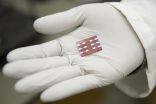
New light has been shed on solar power generation using devices made with polymers, thanks to a collaboration between scientists in the University of Chicago's chemistry department, the Institute for Molecular Engineering, and Argonne National Laboratory. Researchers identified a new polymer — a type of large molecule that forms plastics and other familiar materials — which improved the efficiency of solar cells. The group also determined the method by which the polymer improved the cells' efficiency. The polymer allowed electrical charges to move more easily throughout ...
Read more →
Science 2014-09-19

Research predicts possible 6,800 new Ebola cases this month

Tempe, Ariz. (Sept. 19, 2014) - New research published today in the online journal PLoS Outbreaks predicts new Ebola cases could reach 6,800 in West Africa by the end of the month if new control measures are not enacted. Arizona State University and Harvard University researchers also discovered through modelling analysis that the rate of rise in cases significantly increased in August in Liberia and Guinea, around the time that a mass quarantine was put in place, indicating that the mass quarantine efforts may have made the outbreak worse than it would have been otherwise. ...
Read more →
Science 2014-09-19

Domestic violence likely more frequent for same-sex couples

CHICAGO --- Domestic violence occurs at least as frequently, and likely even more so, between same-sex couples compared to opposite-sex couples, according to a review of literature by Northwestern Medicine scientists. Previous studies, when analyzed together, indicate that domestic violence affects 25 percent to 75 percent of lesbian, gay and bisexual individuals. However, a lack of representative data and underreporting of abuse paints an incomplete picture of the true landscape, suggesting even higher rates. An estimated one in four heterosexual women experience domestic ...
Read more →
Medicine 2014-09-19

A better way to track emerging cell therapies using MRIs

Cellular therapeutics – using intact cells to treat and cure disease – is a hugely promising new approach in medicine but it is hindered by the inability of doctors and scientists to effectively track the movements, destination and persistence of these cells in patients without resorting to invasive procedures, like tissue sampling. In a paper published September 17 in the online journal Magnetic Resonance in Medicine, researchers at the University of California, San Diego School of Medicine, University of Pittsburgh and elsewhere describe the first human tests of using ...
Read more →
NASA catches a weaker Edouard, headed toward Azores
Space 2014-09-19

NASA catches a weaker Edouard, headed toward Azores

NASA's Aqua satellite passed over the Atlantic Ocean and captured a picture of Tropical Storm Edouard as it continues to weaken. The National Hurricane Center expects Edouard to affect the western Azores over the next two days. NASA's Aqua satellite flew over Tropical Storm Edouard on Sept. 18 at 1:45 p.m. EDT and the Moderate Resolution Imaging Spectroradiometer (MODIS) instrument took a visible picture that showed the eye had disappeared and the bulk of clouds pushed east of center. At 5 a.m. EDT on Sept. 19, Edouard's maximum sustained winds had decreased to near ...
Read more →
NASA, NOAA satellites show Odile's remnant romp through southern US
Space 2014-09-19

NASA, NOAA satellites show Odile's remnant romp through southern US

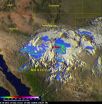
Former Hurricane Odile may be a bad memory for Baja California, but the remnants have moved over New Mexico and Texas where they are expected to bring rainfall there. NASA's TRMM satellite measured Odile's heavy rainfall rates on Sept. 18, and NOAA's GOES-West satellite saw the clouds associated with the former storm continue to linger over the U.S. Southwest on Sept. 19. The remnants of Hurricane Odile were dropping heavy rain in the area from southern Arizona to western Texas when NASA-JAXA's Tropical Rainfall Measuring Mission or TRMM satellite flew over on September ...
Read more →
NASA sees Tropical Storm playing polo with western Mexico
Space 2014-09-19

NASA sees Tropical Storm playing polo with western Mexico

Tropical Storm Polo is riding along the coast of western Mexico like horses in the game of his namesake. NASA's Aqua satellite saw Polo about 300 miles south-southeast of Baja California on its track north. NASA's Aqua satellite flew over Polo on Sept. 18 at 4:35 p.m. EDT and the Moderate Resolution Imaging Spectroradiometer captured a visible image of the storm that showed that much of the clouds, thunderstorms and showers were west and south of the center of circulation, and away from the coast. That's an indication that easterly wind shear had increased and were pushing ...
Read more →
NASA eyes Tropical Storm Fung-Wong move through Northwestern Pacific
Space 2014-09-19

NASA eyes Tropical Storm Fung-Wong move through Northwestern Pacific

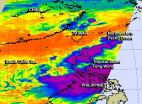
Tropical Storm Fung-Wong continued to affect the Philippines while moving north through the Northwestern Pacific Ocean. NASA's Aqua satellite provided infrared data on the storm's clouds that showed some high, strong thunderstorms with the potential for heavy rainfall over the northern and central regions of the country. The storm is now expected to affect three more countries over the next several days. The AIRS instrument aboard NASA's Aqua satellite uses infrared light to read cloud top temperatures in tropical cyclones. When Aqua passed over Fung-Wong infrared data ...
Read more →
Dwindling wind may tip predator-prey balance
Science 2014-09-19

Dwindling wind may tip predator-prey balance

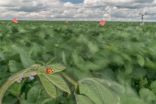
MADISON, Wis. — Bent and tossed by the wind, a field of soybean plants presents a challenge for an Asian lady beetle on the hunt for aphids. But what if the air — and the soybeans — were still? Rising temperatures and shifting precipitation patterns may get the lion's share of our climate change attention, but predators may want to give some thought to wind, according to a University of Wisconsin Madison zoologist's study, which is among the first to demonstrate the way "global stilling" may alter predator-prey relationships. "There are all sorts of other things that ...
Read more →
Science 2014-09-19

A two generation lens: Current state policies fail to support families with young children

September 19, 2014 -- Recent two-generation approaches to reducing poverty that help children and their parents are receiving increasing attention from researchers, advocates, and foundations. By combining education and training for parents to enable them to move to jobs that offer a path out of poverty with high-quality early care and education for children, these programs aim to improve the life opportunities of both. However, according to a new report from the National Center for Children in Poverty (NCCP), State Policies through a Two-Generation Lens, while research ...
Read more →
Soft robotics 'toolkit' features everything a robot-maker needs
Technology 2014-09-19

Soft robotics 'toolkit' features everything a robot-maker needs

A new resource unveiled today by researchers from several Harvard University labs in collaboration with Trinity College Dublin provides both experienced and aspiring researchers with the intellectual raw materials needed to design, build, and operate robots made from soft, flexible materials. With the advent of low-cost 3D printing, laser cutters, and other advances in manufacturing technology, soft robotics is emerging as an increasingly important field. Using principles drawn from conventional rigid robot design, but working with pliable materials, engineers are pioneering ...
Read more →
Technology 2014-09-19

Fingertip sensor gives robot unprecedented dexterity

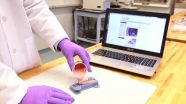
CAMBRIDGE, Mass-- Researchers at MIT and Northeastern University have equipped a robot with a novel tactile sensor that lets it grasp a USB cable draped freely over a hook and insert it into a USB port. The sensor is an adaptation of a technology called GelSight, which was developed by the lab of Edward Adelson, the John and Dorothy Wilson Professor of Vision Science at MIT, and first described in 2009. The new sensor isn't as sensitive as the original GelSight sensor, which could resolve details on the micrometer scale. But it's smaller — small enough to fit on a robot's ...
Read more →